You train. You recover. But your body responds differently.
Recovery takes longer. Energy is harder to count on. Strength, body composition, sleep, or performance may feel harder to maintain. RHM uses peptide therapy strategically — based on what you're trying to improve, your health history, and what your physiology tells us.

Your body changed. Your strategy should too.
Recovery takes longer. Energy is less predictable. Sleep, strength, body composition, and performance don’t respond like they once did. Peptide therapy opens new ways to address those changes. At RHM, we don’t just offer peptides — we use them strategically.
What You've Been Told:
- “Your labs are fine.”
- “You just need to train harder.”
- “Everyone slows down eventually.”
Peptides are reshaping performance, recovery, body composition, and longevity. RHM was part of that conversation before it became mainstream. Our physicians combine peptide expertise with your hormones, metabolism, health history, and goals to build a strategy around you.
Advanced peptide medicine. Built around your physiology.
Offering peptides isn’t the same as understanding peptide medicine.
At RHM, peptide therapy isn’t driven by what’s trending. It’s driven by decades of clinical experience, your physiology, your goals, and how your body responds — from peptide selection and dosing through monitoring and optimization.
Different goals call for different peptide strategies.
There is no universal “best peptide.” Different peptides act on different pathways and are used with different goals in mind. The right strategy depends on your physiology, health history, goals, and response to treatment.
Metabolic health
Certain peptides may support appetite regulation, insulin sensitivity, body composition, and other aspects of metabolic health. RHM considers these alongside your broader hormone and metabolic picture.

Tissue Repair & Recovery
Some peptides are used for their potential role in tissue repair, inflammatory signaling, and recovery — particularly when injury, training, or slower recovery is getting in the way.
Longevity & Cellular Health
Certain peptide strategies are being explored for their potential role in cellular function, tissue resilience, skin and hair health, and healthy aging.

Performance support
Depending on the peptide and the patient, therapy may support areas such as recovery, sleep, body composition, and performance. The strategy is built around what you're trying to improve.
Muscle & recovery
Certain peptides may influence pathways involved in growth-hormone signaling, lean tissue, and recovery. RHM considers your symptoms, labs, goals, and response when determining how these therapies fit into a broader plan.

Sleep & recovery
Some peptide strategies may support sleep and recovery pathways — particularly when poor sleep is affecting energy, training, performance, or how well you bounce back.
The peptide is only part of the strategy. Knowing which one to use, how to dose it, what to monitor, and when to adjust is where experience matters.
PEPTIDE THERAPY AT RHM
The peptide is only part of the strategy.
Knowing which peptide to use, how to dose it, what to monitor, and when to adjust is where experience matters. RHM draws from a broad range of peptide therapies to build strategies around the individual — not a pre-set protocol.
Used and explored for metabolic health, appetite regulation, blood sugar control, weight management, and body composition.
GLP-1–Based Therapies
Often considered for growth-hormone signaling, recovery, sleep, body composition, and healthy aging.
Sermorelin
CJC-1295 + Ipamorelin
BPC-157
Used and explored in strategies involving growth-hormone signaling, metabolic health, and body composition.
Tesamorelin
GHK-Cu
Explored for its effects on melanocortin pathways involved in sexual desire and sexual response.
PT-141 / Bremelanotide
Thymosin-Related Peptides
“Normal” labs don’t always mean nothing is changing.
A few isolated markers can miss the bigger picture. RHM looks at hormones, metabolism, inflammation, recovery, and symptoms together before deciding what deserves attention.
Standard workup
160+ biomarkers
A handful of markers
Systems read together
Results viewed one by one
Hormones, thyroid, metabolism, inflammation, recovery
Often limited to the immediate concern
Energy, recovery, body composition, sleep, and performance considered together
The primary symptom addressed first
Built around your findings and monitored over time
Often focused on the immediate response
TOO MANY PEPTIDES. TOO MANY OPINIONS.
You shouldn’t have to become a peptide expert to know what’s right for you. By the time most men find RHM, they’ve already done the research. They’ve listened to podcasts, searched peptides, compared protocols, and probably have a list of compounds they’re curious about. The problem usually isn’t finding more information. It’s knowing which information actually applies to you.


You shouldn’t have to become a peptide expert to know what’s right for you. By the time most men find RHM, they’ve already done the research. They’ve listened to podcasts, searched peptides, compared protocols, and probably have a list of compounds they’re curious about. The problem usually isn’t finding more information. It’s knowing which information actually applies to you.
You’ve done the research. Now what?
You’ve heard about BPC-157, sermorelin, GLP-1s, peptide stacks, dosing, cycling — and probably gotten five different answers about what you “need.” At some point, more information doesn’t make the decision any clearer.
Our Approach to Peptide Therapy
Discovery Call
Discuss what’s changed, your symptoms, health history, and what you want to improve.

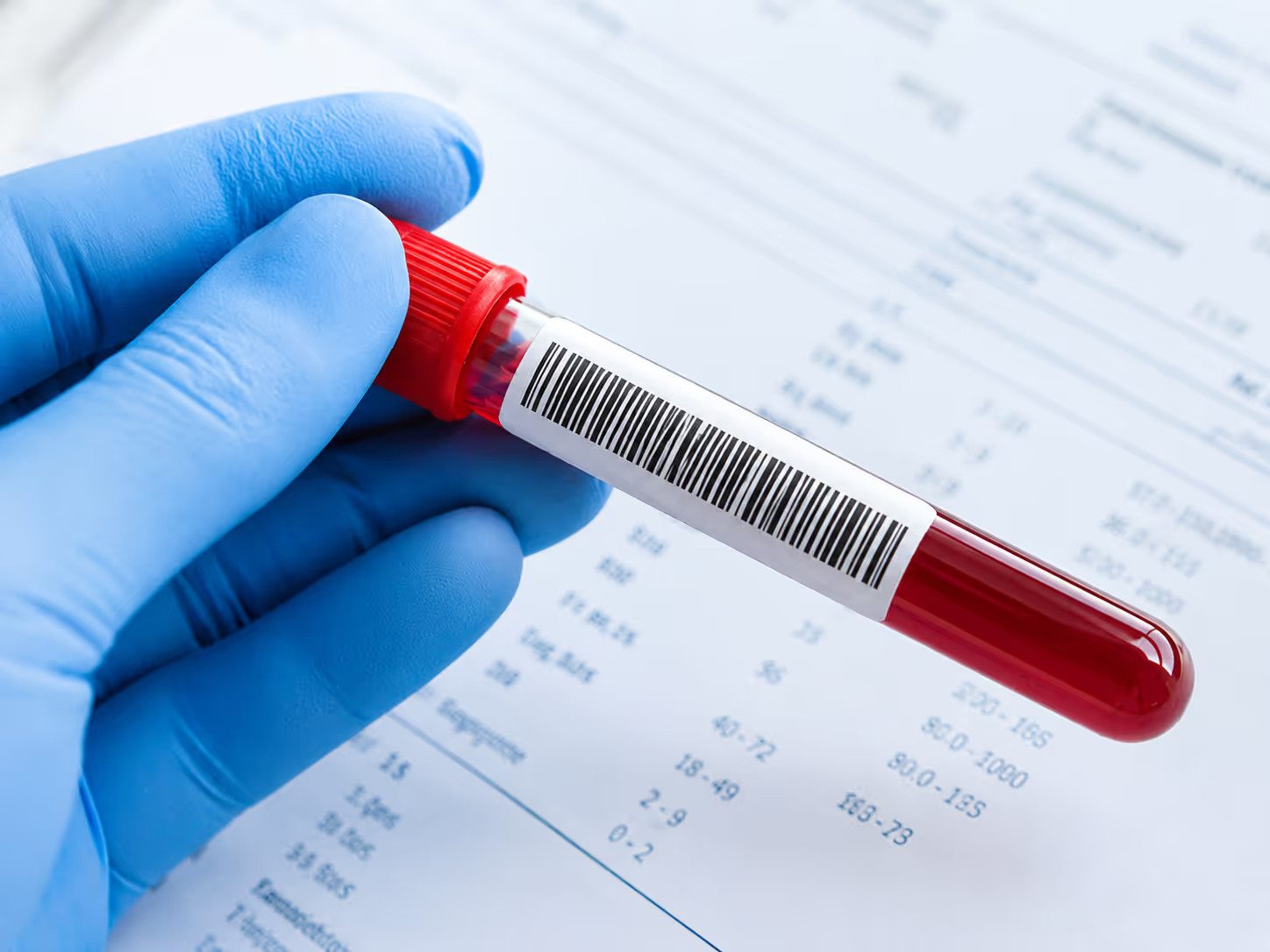
Comprehensive Lab Evaluation
Review 160+ biomarkers across hormones, thyroid, metabolism, inflammation, recovery, and overall health.
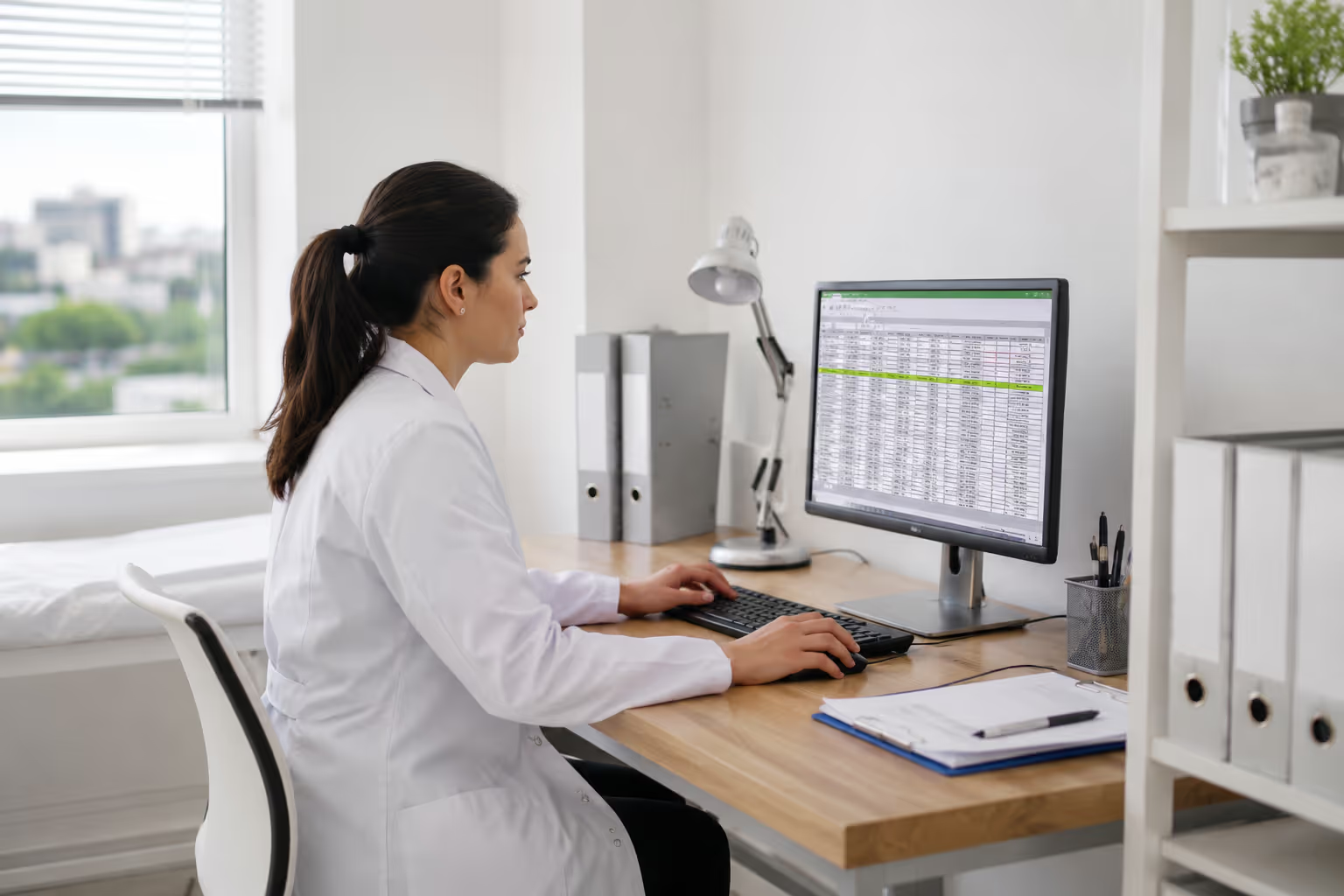
Physician Review
Your results are reviewed together to identify patterns that may be affecting energy, recovery, body composition, and metabolic health.

Personalized Treatment Plan
If peptide therapy is appropriate, your physician builds a plan around your labs, symptoms, goals, and risk profile.
Ongoing Monitoring
Track your response over time and adjust treatment, dosing, or strategy as your needs change.

Step
1
Step
2
Step
3
Step
4
Step
5

Peptide therapy should be built around your physiology. Not the other way around.
RHM evaluates 160+ biomarkers before deciding whether peptides belong in the plan. Because the protocol should follow the biology, not what is trending.
573+
160+
20+
Research & Insights on Peptides

Peptide therapy and TRT work differently and solve different problems. See how RHM decides which fits your labs, symptoms, and goals — not a template.
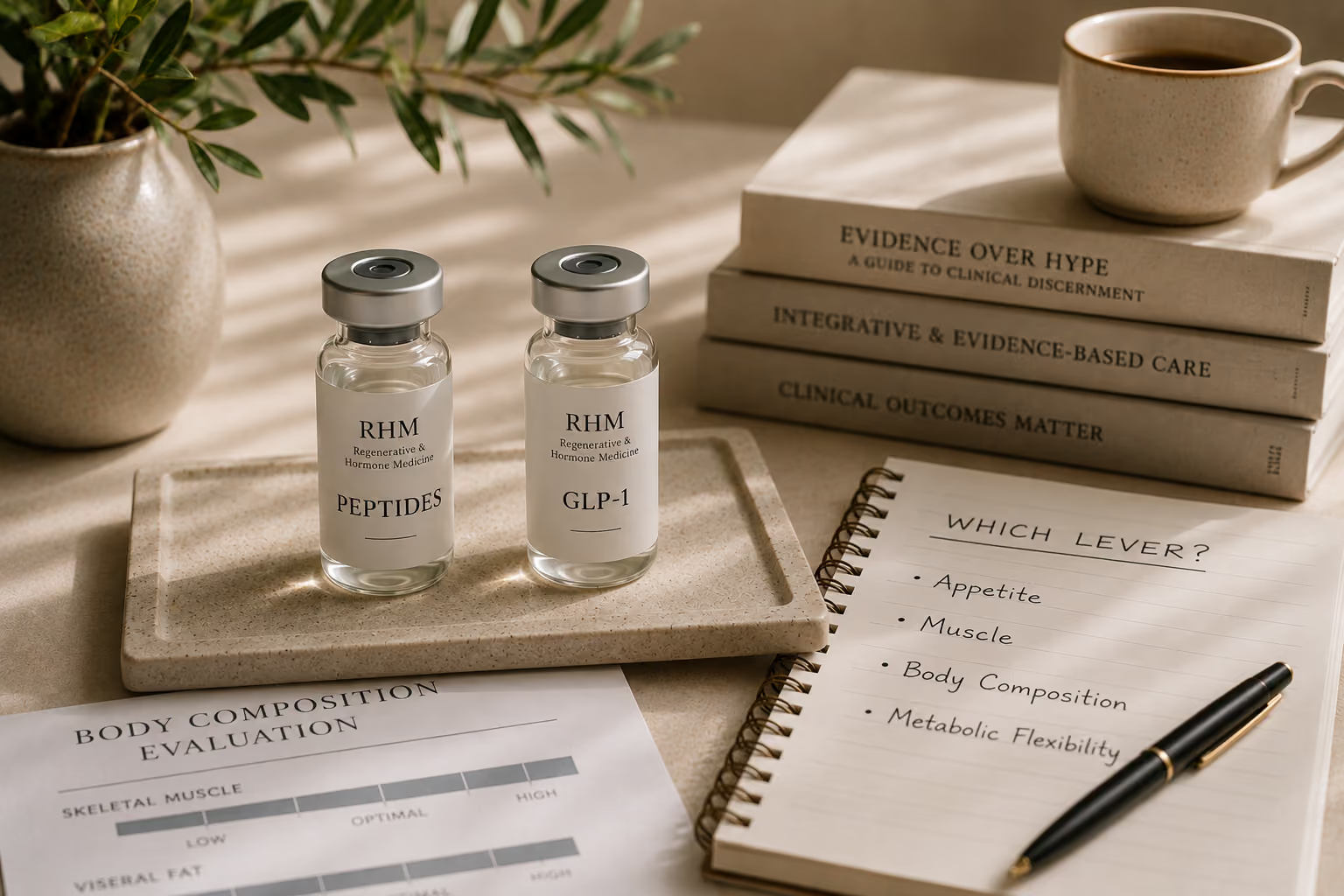
Peptides vs GLP-1: which one actually fits your goals — appetite, muscle, or metabolism? A physician-led comparison, not a sales pitch.

Not losing weight on Ozempic, or gaining it back? A physician-led look at why the scale stalls: metabolic adaptation, muscle loss, thyroid, and insulin.
Start with a clearer picture of what your body actually needs.
- Comprehensive, physician-led evaluation before peptide therapy
- 160+ biomarkers evaluated together
- A plan built around your findings — whether peptides belong in it or not

FAQ
Are peptides safe?
They can be appropriate for some patients, but “peptides” isn’t one treatment. Safety depends on what’s being used, your health history, the dose, where it comes from, and how you’re monitored. RHM treats sourcing and physician oversight as part of the treatment — not an afterthought.
Are peptides the same as testosterone or other hormones?
No. They’re both signaling molecules, but they work differently. Peptides can act on more specific physiologic pathways, while hormones such as testosterone tend to have broader systemic effects. Peptide therapy doesn’t replace a proper hormone evaluation — or TRT when TRT is actually indicated.
Will every man benefit from peptide therapy?
No. And that’s exactly why RHM doesn’t start with a peptide menu. Whether peptide therapy makes sense depends on your symptoms, labs, goals, medical history, and risk profile. Sometimes peptides belong in the plan. Sometimes something else deserves attention first.
Are peptides FDA-approved?
It depends on the specific therapy. Some peptide-based treatments are FDA-approved for specific uses. Others may be compounded under physician supervision, while some are restricted or not appropriate for clinical use. That’s why what you saw online matters less than what can be appropriately prescribed, sourced, and monitored for you.
Can TRT and peptide therapy be used together — or does one replace the other?
They’re not interchangeable. In some cases, peptide therapy may be considered alongside TRT or other hormone care. In others, one may not be appropriate at all. The decision should come from your labs and physiology — not from trying to build the biggest protocol possible.If testosterone appears to be part of the problem, learn more about our Performance & Recovery care, or read Peptide Therapy vs TRT.
Why does physician supervision matter?
Because choosing the peptide is only one part of the decision. The dose, source, medical history, risks, and your response over time all matter. Physician oversight also helps answer a more important question: whether peptide therapy is actually the right treatment in the first place.
How do I know if a peptide source is legitimate?
Start with who is prescribing it and where it comes from. Legitimate care should involve a licensed medical provider, an appropriate pharmacy, clear dosing instructions, quality controls, and ongoing monitoring. Be cautious with research-grade products, vague “medical-grade” claims, or anyone willing to sell you peptides without understanding your medical history first.
What labs are checked before peptide therapy?
It depends on why you’re considering peptides. Your evaluation may include hormones, thyroid function, glucose and insulin, HbA1c, lipids, inflammatory markers, and other metabolic or recovery-related markers. At RHM, those results are interpreted together rather than using one marker to justify a protocol.
What changes when peptide therapy is used appropriately?
That depends on why it was prescribed. Some men may notice changes in recovery, body composition, sleep, energy, metabolic health, or inflammation-related symptoms. Results vary, and nothing is guaranteed. The point is to use peptide therapy for a specific reason — then monitor whether it’s actually helping.
Will I automatically be prescribed peptides?
No. Coming to RHM for peptide therapy doesn’t mean you leave with peptides. We first look at your symptoms, labs, history, goals, and risk profile. If something else deserves attention first — hormones, thyroid function, metabolism, sleep, inflammation, or recovery — that’s where the plan should start.
Do you offer peptide therapy in Los Angeles?
Yes. RHM Med is a physician-led practice in Los Angeles. The process starts with a free VIP call to understand what’s changed, what you’re trying to improve, and whether a deeper evaluation makes sense before any treatment is considered.