Your effort hasn't changed. Your Metabolism has.
You're still training and watching what you eat, but your body isn't responding the way it used to. RHM evaluates your metabolic health, insulin sensitivity, hormones, sleep, stress, and body composition together — then builds a plan around what we find.

What you're experiencing isn't random.
You’re still putting in the effort. But the same workouts, eating habits, and routines are producing less than they used to — and your body feels harder to manage.
What You've Been Told:
- "You just need to eat cleaner and count calories."
- “You need more exercise.”
- “This is just what happens after 35.”
Your metabolism isn't just about how many calories you burn. It's a reflection of how well your body is functioning. Hormones, insulin sensitivity, sleep, stress, and body composition are deeply connected—and lasting results come from understanding how they work together.
When the same effort keeps producing less, it’s worth understanding what changed underneath it.
What is Metabolic Health?
Metabolic health is how efficiently your body regulates blood sugar, insulin, and energy use — determining whether food becomes fuel, how easily you access stored fat, and why weight and energy become harder to manage.
Metabolic changes rarely show up in just one place
Weight, blood sugar, appetite, muscle, hormones, sleep, and stress all influence how your body uses and stores energy. When several begin shifting together, the same routine can start producing very different results.
Insulin Sensitivity
Your body becomes less efficient at managing blood sugar and insulin. Energy can fluctuate more, while accessing stored fat becomes harder.

Weight Regulation
Weight becomes easier to gain and harder to lose — particularly around the midsection — even when your eating and training habits have not changed much.
Apetite & Cravings
Hunger feels less predictable. Sugar or carb cravings become stronger, and meals that used to keep you satisfied may no longer hold you for as long.

Body Composition
Muscle becomes harder to build or maintain while body fat becomes easier to accumulate, changing the metabolic baseline you are working with.
Hormone Signaling
Testosterone, cortisol, and thyroid function influence how your body regulates energy, muscle, appetite, and fat storage — and changes in one system can affect the others.

Inflammation & Stress Load
Chronic stress, poor sleep, and inflammation can interfere with insulin response and recovery, reinforcing the metabolic changes you are already noticing.
Why standard care often falls short
The problem isn’t always your effort. It’s what hasn’t been evaluated together.
Weight-First
Single-Marker
Generic Advice
Reactive
Disconnected
Scale-Focused
Your labs can look normal. And still miss what’s changing in your metabolism.
A standard panel looks at individual markers against population ranges. RHM evaluates insulin sensitivity, hormones, thyroid function, inflammation, and other metabolic markers together — so the results are interpreted in the context of how your body is actually responding.
Traditional labs
160+ biomarkers
A handful of hormone markers
Systems read together
Single markers in isolation
Thyroid, cortisol, metabolism, inflammation, recovery
Rarely included
One connected pattern
Each symptom on its own
Physician-led, physiology-driven
Minimal context
Built around your physiology
Reactive and generalized
Why the same routine stops working
You can eat well, train consistently, and still watch your weight, energy, and body composition move in the wrong direction. When insulin sensitivity, hormones, sleep, stress, and metabolism shift, the same effort can start producing a very different result. For some men, peptide therapy may be considered as part of a personalized metabolic plan.


Poor sleep and chronic stress can affect cortisol and insulin response. Reduced insulin sensitivity can make blood sugar harder to regulate and stored fat harder to access, while changes in testosterone, thyroid function, and muscle mass can further influence energy use and body composition.
Why it becomes harder to keep dismissing it
At first, the explanations seem reasonable: eat cleaner, train harder, give it more time. But when the same routine keeps producing less, the issue becomes harder to explain away.
Our Approach to Metabolic Health
Discovery Call
Discuss symptoms, history, and whether deeper evaluation makes sense.

Comprehensive Lab Evaluation
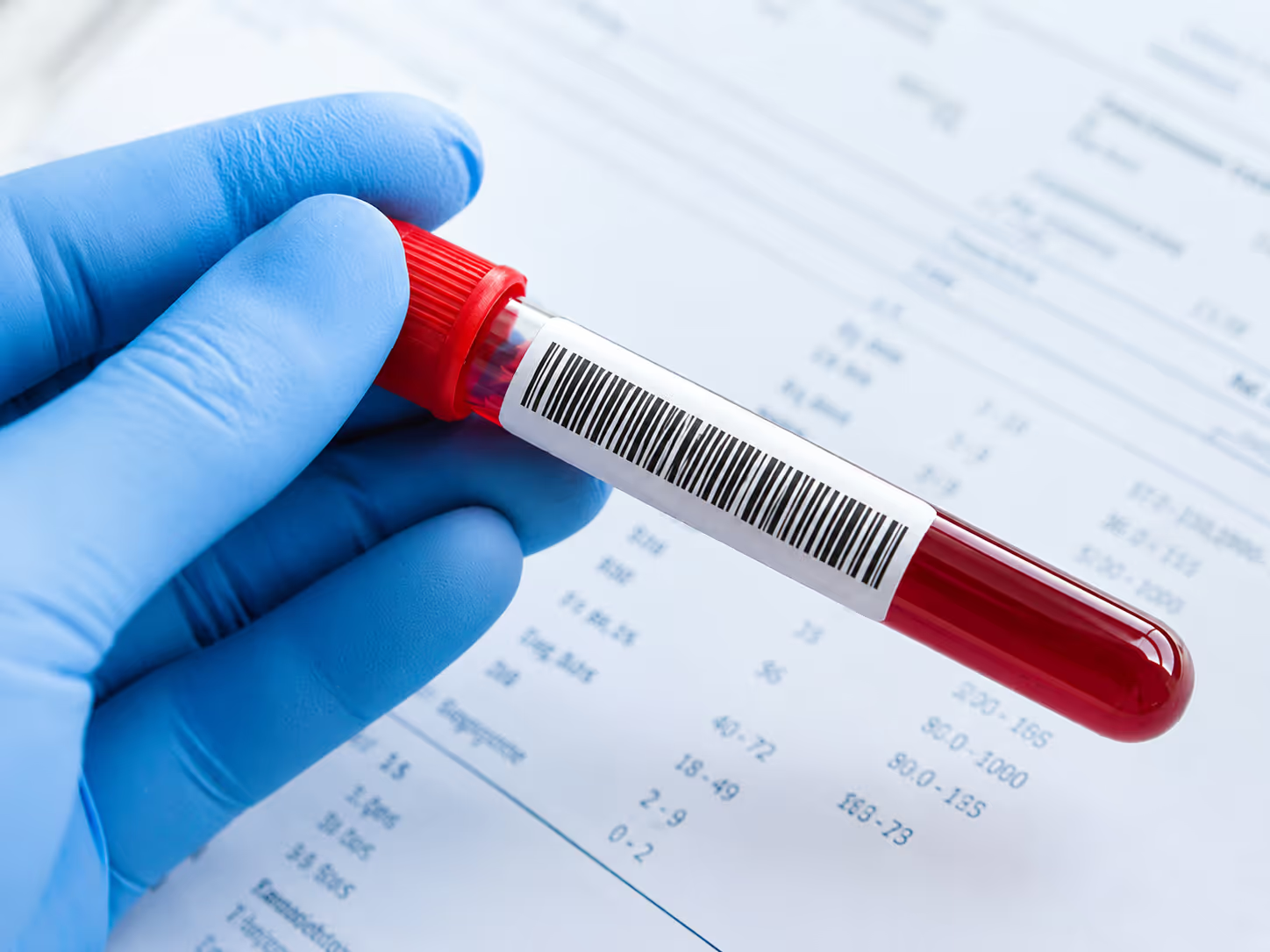
Test 160+ biomarkers across hormones, thyroid, metabolism, cortisol, and inflammation.
Physician Review
Review your labs and symptoms to identify what may be driving the pattern.

Personalized Plan
Build a plan around your physiology, with TRT considered only when appropriate.

Ongoing Monitoring
Track your response and adjust care as your needs change.

Step
1
Step
2
Step
3
Step
4
Step
5

Physician-led care built around your physiology
Most men who come to RHM are already doing the work. We look deeper at insulin sensitivity, hormones, thyroid function, inflammation, and body composition to understand what’s changing — then build and monitor care around what your evaluation actually shows.
573+
160+
20+
Research & Insights on Insulin Resistance

Wondering how insulin resistance is actually tested? A physician-led look at what a real panel checks, at-home options, and what the results can mean.

Metabolic testing can mean a lot of things. Here's what RHM actually checks — and why one number rarely tells the full story.

Not losing weight on Ozempic, or gaining it back? A physician-led look at why the scale stalls: metabolic adaptation, muscle loss, thyroid, and insulin.
Start Feeling Like Your Body Is Working With You Again.
- Personalized, physician-led metabolic and hormone care
- 160+ biomarkers evaluated together
- A plan built around your insulin sensitivity, hormones, metabolism, and body composition

FAQ
What is metabolic health?
Metabolic health refers to how efficiently your body regulates blood sugar, insulin, and energy use. When these systems work well, your body can access and burn stored fat efficiently; when they're not, the same diet and exercise effort often produces a smaller result.
What does poor metabolic health look like in men?
It can show up as stalled weight loss despite consistent effort, fat that concentrates around the midsection, energy crashes after meals, stronger sugar or carb cravings, and muscle that's harder to build or keep. Symptoms alone can't confirm what's driving it — a lab panel is the only way to know.
How is metabolic health assessed or tested?
Evaluation typically includes fasting insulin, HbA1c, a lipid panel, and hormone and thyroid markers, since these systems influence each other. A single blood sugar reading gives you one data point, not the full picture.
Can metabolic health be improved without medication?
For some men, addressing sleep, stress, and training load can meaningfully shift these markers. For others, the evaluation points toward additional support. We don't start from a fixed answer — the plan follows what your labs show, always alongside your physician's guidance.
Why does metabolic health get harder to maintain with age?
Hormone levels, muscle mass, and insulin sensitivity tend to shift gradually with age, which can make the same diet and exercise routine less effective over time. That shift is evaluable, not something you have to just accept — it's part of why we test for it directly instead of assuming it.