Men / Physician-led hormone therapy
Looking for a hormone specialist near you? Low energy, stubborn weight, poor sleep, brain fog, and low libido can all be signs that something’s off. We look at your hormones, metabolism, symptoms, and labs to find out what’s actually going on—and build a plan around you.

You know when something feels off.
You’re still working, training, showing up, and handling what needs to be handled. But you don’t feel like you used to—and “you’re just getting older” isn’t a good enough answer.
What You've Been Told:
- “You're just stressed.”
- “This is just what happens as you get older.”
- “You probably just need testosterone.”
Your symptoms are information. Low energy, slower recovery, stubborn weight, brain fog, poor sleep, or changes in libido can have more than one cause. Testosterone may be part of the picture—but so can thyroid function, metabolic health, stress, recovery, and other hormones.
Don’t guess. Find out what changed.
What is Hormone Optimization?
Hormone optimization isn’t about chasing a testosterone number. It’s about understanding how your hormones, thyroid, metabolism, stress, and recovery work together—then treating the whole picture so you can function and feel your best.
When something shifts, you feel it everywhere.
Hormones don't operate in isolation. Energy, strength, recovery, focus, libido, sleep, body composition, thyroid function, and metabolic health are interconnected. When several start changing at once, it's worth finding out why.
Stress Resilience
Your tolerance for physical and mental stress may drop, leaving you feeling more depleted by demands you previously handled without much thought.

Motivation & Focus
Drive can feel flatter, concentration less consistent, and tasks that once felt automatic may require more effort.
Libido & Sexual Performance
Changes in testosterone and other hormones can affect sexual desire, performance, and the sense of physical confidence you used to take for granted.

Body Composition
Muscle can become harder to maintain while abdominal fat becomes easier to gain — even when your training and eating habits haven't changed much.
Energy & Recovery
Energy becomes less reliable, and workouts, travel, or stressful weeks take longer to recover from than they used to.

Sleep, Thyroid & Metabolism
Hormones don't operate independently. Sleep quality, thyroid function, metabolic health, and stress physiology can all influence how you feel — and can contribute to the same symptoms often blamed on testosterone alone.
Why a testosterone number is not the full story
The problem isn't always low testosterone. It's what hasn't been evaluated together.
Testosterone-First
More Than One Lab Value
Your Goals Matter
Care That Evolves With You
The goal isn't to get you on testosterone. The goal is to figure out what your body actually needs.
A hormone evaluation should look beyond total testosterone alone. RHM evaluates testosterone alongside estradiol, SHBG, DHEA-S, cortisol, thyroid function, and the broader physiologic picture — so treatment is based on what your body actually needs.
Standard workup
160+ biomarkers
Often centered on total testosterone
Hormones and related systems read together
Individual markers considered in isolation
Thyroid, cortisol, metabolism, sleep, stress, and recovery considered
Broader contributors may receive less attention
Discussed & planned for before treatment begins
Often addressed after treatment is underway
TRT only when the evaluation indicates it
Standardized testosterone protocols may be the primary option
Physician-led monitoring and plan adjustment
Often refill-based with limited adjustment
You can’t outwork what you haven’t identified.
You can keep training harder, cleaning up your diet, adding supplements, sleeping more, and trying to power through. But when your baseline has changed, more effort isn’t always the answer.


This is where we stop guessing. Low testosterone may be part of the picture—or it may not be. The goal is to understand what changed, why you feel different, and what actually needs attention. That means looking beyond a single lab value and evaluating the patterns across your symptoms, labs, lifestyle, and physiology before deciding what treatment makes sense. You shouldn't have to work twice as hard just to feel half as good.
Why it becomes harder to keep dismissing it
At first, the explanations seem reasonable: stress, poor sleep, getting older, working too much. But when the same changes keep showing up month after month, they become harder to explain away.
Our Approach to Metabolic Health
Discovery Call
Talk through what’s changed, what you’re experiencing, your health history, and what you want to improve.

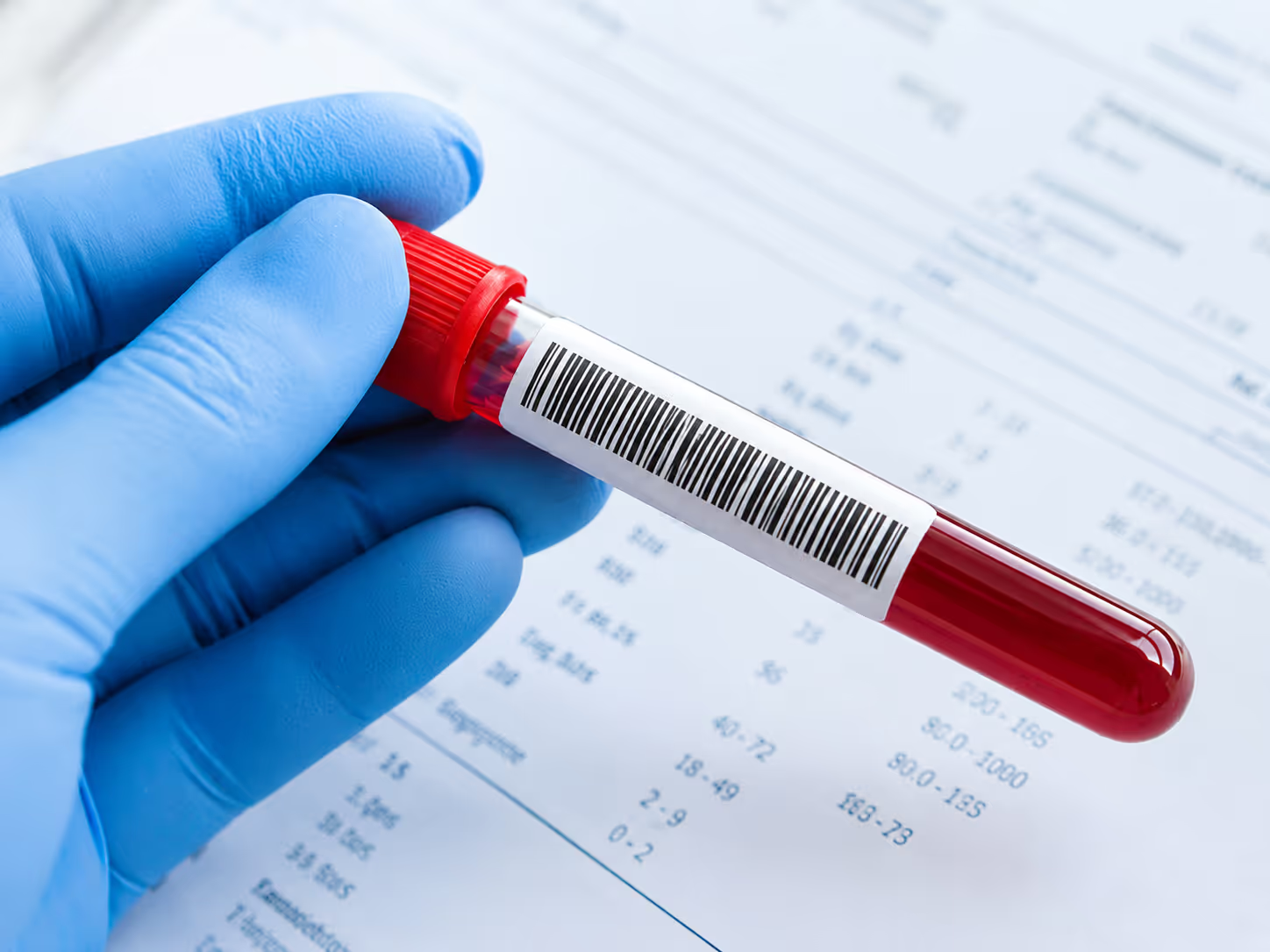
Comprehensive Lab Evaluation
Evaluate 160+ biomarkers across hormones, thyroid function, metabolism, cortisol, inflammation, and other relevant systems.
Physician Review
Your physician reviews your labs alongside your symptoms and goals to identify the patterns that may be contributing to how you feel.

Personalized Plan
Create a treatment plan around your physiology — whether that involves TRT, supporting natural hormone production, addressing other contributing factors, or a combination.
Ongoing Monitoring
Track how you feel, how your biomarkers respond, and how your goals change over time so your care can evolve with you.

Step
1
Step
2
Step
3
Step
4
Step
5

Physician-led hormone care built around your physiology
We evaluate testosterone alongside your broader hormonal, metabolic, and thyroid picture — then build and monitor a plan around your labs, symptoms, fertility goals, and long-term health.
573+
160+
20+
Start your path back to feeling like yourself
- Personalized, physician-led hormone care
- 160+ biomarkers evaluated together
- A plan built around your labs, symptoms, fertility goals, and long-term health

FAQ
What is hormone optimization?
Hormone optimization means evaluating your full hormonal picture — testosterone, estradiol, DHEA-S, cortisol, and thyroid function together — rather than testing one marker in isolation, then building a plan around what that evaluation actually shows.
Is hormone therapy for men the same as TRT?
Not exactly. TRT is one form of hormone therapy — testosterone replacement specifically. Hormone therapy for men is broader. Depending on what your evaluation shows, treatment may involve TRT, support for your body's natural testosterone production, or addressing metabolic and recovery factors first.
What's the difference between a hormone specialist and a testosterone clinic?
A testosterone clinic is generally centered around one hormone and one treatment path. A hormone specialist evaluates your broader hormonal and metabolic picture — including thyroid, cortisol, estradiol, and more — before recommending treatment.
What is andropause?
Andropause refers to the gradual decline in testosterone that can occur with age. Symptoms can overlap with other hormonal, metabolic, sleep, and stress-related changes, which is why evaluation matters before assuming testosterone is the cause.
Are the symptoms of andropause the same as low testosterone?
They can overlap, but they're not automatically the same thing. Fatigue, lower motivation, reduced recovery, and changes in body composition can have several causes. Lab testing and clinical evaluation help determine what's actually contributing.
Will hormone therapy affect my fertility?
It can, depending on the treatment. Testosterone therapy specifically can affect sperm production and natural hormone signaling. That's why fertility goals should be discussed before treatment begins — especially if you're younger or considering having children in the future.
Do I need TRT, or could something else explain how I feel?
Possibly. TRT is one potential outcome of a full evaluation, not the default. If your results point toward thyroid, metabolic, sleep, stress, or recovery-related factors instead — or alongside testosterone — those may need to be addressed as part of your plan.
What does a hormone evaluation actually check?
A comprehensive evaluation can include total and free testosterone, estradiol, SHBG, DHEA-S, cortisol, and thyroid markers, alongside the broader metabolic and physiologic picture. Looking at these together provides more context than a single testosterone result.
Do I need a referral to see a hormone specialist?
Generally, no. You can schedule an evaluation directly. If you're already seeing another specialist for a related condition, RHM can work alongside that care rather than replacing it.