Women / Postmenopause
Postmenopause care for when things settled and you still didn't.
Postmenopause
After menopause, lower hormone levels continue shaping how your body regulates energy, metabolism, sleep, and recovery. We look at the full picture and build care around your physiology, not your age.

You were told the hard part was over.
The dramatic swings have quieted. Things look more stable from the outside. But underneath that, you still don't feel fully settled or like yourself.
You've been told:
- “This is just aging”
- “There is nothing else to do”
- “You should be able to push through”
Stable is not the same as well
What is Postmenopause?
Postmenopause begins after 12 consecutive months without a menstrual period and continues for the rest of your life. Hormone levels remain lower and more stable long term, but lower and stable does not always mean your body feels optimal.
Postmenopause symptoms are often quieter, but more persistent.
Symptoms may not feel as dramatic as they once did. But over time, changes in energy, sleep, strength, mood, libido, and recovery can quietly affect how you function day to day.
Energy & Recovery
Persistent fatigue, slower recovery, lower stamina, feeling physically flat

Sleep & Mood
Lighter sleep, waking at night, lower motivation, anxiety, mood changes
Weight & Metabolism
Abdominal weight gain, reduced muscle tone, blood sugar changes, metabolic slowdown

Brain & Focus
Brain fog, slower recall, reduced mental sharpness, lower focus
Libido & Sexual Health
Low libido, vaginal dryness, discomfort, reduced responsiveness

Bone, Joint & Body Changes
Joint discomfort, bone density concerns, hair thinning, dry skin, reduced strength
Why it keeps compounding
Postmenopause affects more than hormone levels.
Persistently lower hormone levels influence much more than reproductive function. They affect how your body regulates energy, maintains muscle, recovers from stress, manages inflammation, protects bone, and supports cardiovascular health.
Hormone decline
Lower hormones accelerate muscle loss — slowing metabolism and making weight harder to manage
Muscle loss
Metabolic slowdown
Rising Inflamation
Bone density loss
Cardiovascular risk
Your labs can look normal. And still miss everything that matters.
Standard panels can confirm you're in menopause. They rarely explain why you still feel exhausted, foggy, anxious, and unlike yourself.
Traditional labs
160+ biomarkers
A handful of hormone markers
Systems read together
Single snapshots in isolation
Connected pattern
Each symptom separately
Physician-led, physiology-driven
Minimal context provided
Built around your physiology
Reactive and generalized
Long-Term Health
Most postmenopause care stops when the hot flashes do. But changes to bone, heart, metabolism, cognition, and recovery don't stop. They accumulate quietly in ways that are far easier to address early than to reverse later.


This is not about managing decline. It's about protecting what you still have time to protect. At RHM, we look beyond how you feel today to how your body is positioned for the decades ahead. Postmenopause phase deserves more attention, not less.
Why it becomes harder to ignore
At first you adapt. You tell yourself this is probably just aging. But at some point the adapting stops working and what you've been pushing through starts pushing back.
How RHM Treats Postmenopause
Discovery Call
Discuss symptoms, history, and whether deeper evaluation makes sense.

Comprehensive Lab Evaluation
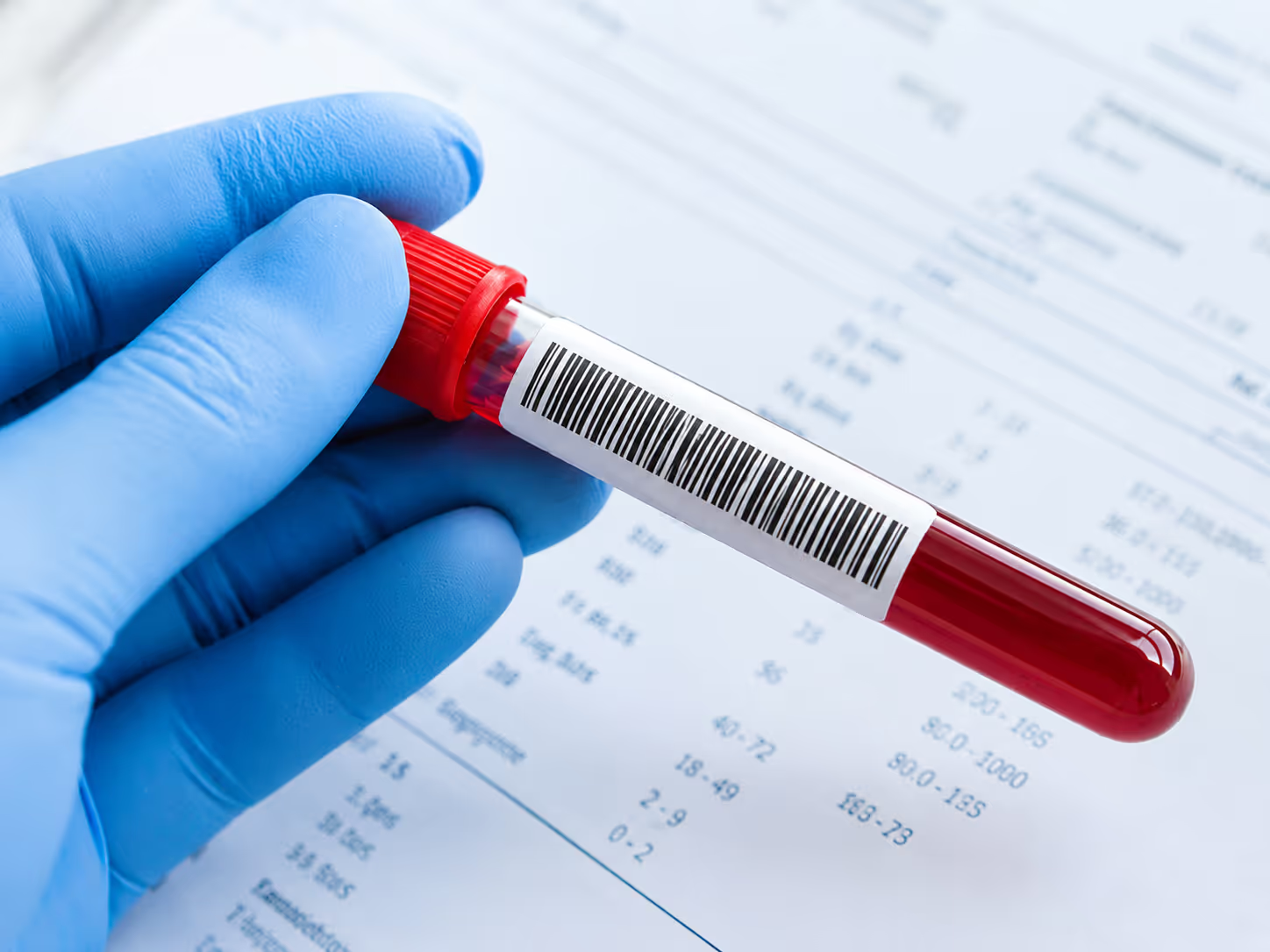
Test 160+ biomarkers across hormones, thyroid, cortisol, metabolism, and inflammation.
Provider Consultation
Review your results with an RHM physician and understand what may be driving your symptoms.

Personalized Plan
Get a treatment plan built around your labs, symptoms, physiology, and goals.

Ongoing Monitoring
Adjust your care over time as your body responds and your needs change.

Step
1
Step
2
Step
3
Step
4
Step
5

Physician-led care built around your long-term physiology
Most hormone clinics focus on protocols. RHM evaluates the full pattern behind your symptoms and then builds care around your physiology.
573+
160+
20+
Start your journey to personalized postmenopause care
- Physician-led postmenopause care
- 160+ biomarkers evaluated
- Hormone, metabolic, bone, and cardiovascular context

FAQ
What is postmenopause?
Postmenopause is the stage of life that begins after you have gone 12 consecutive months without a menstrual period. It continues for the rest of your life. Hormone levels remain lower during this stage, which can affect metabolism, bone health, cardiovascular health, sleep, mood, libido, muscle maintenance, and recovery.
How long does postmenopause last?
Postmenopause lasts for the rest of your life after menopause. Menopause is the 12-month milestone without a period; postmenopause is everything that comes after.
What is the difference between menopause and postmenopause?
Menopause is confirmed after 12 consecutive months without a period. Postmenopause begins after that point. In menopause, symptoms may feel more intense and dramatic. In postmenopause, symptoms often become less obvious but more persistent.
Why do I still feel symptoms years after menopause?
Some symptoms can continue for years after menopause because lower hormone levels can keep affecting sleep, metabolism, thyroid function, inflammation, muscle mass, sexual health, mood, and recovery. Just because symptoms are common does not mean they should be ignored.
What are common postmenopause symptoms?
Common postmenopause symptoms include fatigue, sleep disruption, brain fog, low libido, vaginal dryness, joint pain, hair thinning, abdominal weight gain, reduced muscle mass, slower recovery, mood changes, heart palpitations, dry skin, and recurring urinary or vaginal discomfort.
Is this just normal aging?
Not always. Aging plays a role, but symptoms after menopause may also be connected to hormones, thyroid function, insulin resistance, inflammation, nutrient status, bone density, cardiovascular markers, sleep quality, and recovery capacity. A comprehensive evaluation can help separate “normal aging” from treatable physiology.
Can postmenopause cause weight gain?
Yes. Postmenopause can contribute to weight gain, especially around the abdomen. Lower estrogen, reduced muscle mass, insulin resistance, poor sleep, inflammation, thyroid issues, and lower recovery capacity can all affect how your body stores fat and responds to diet and exercise.
Is it too late to address postmenopause symptoms?
No. It is not too late to address symptoms, improve how you feel, or support long-term health. The right approach depends on your age, medical history, symptoms, labs, risk profile, and goals.
Is it too late to start HRT after menopause?
Not always, but timing matters. Whether hormone therapy is appropriate depends on how long it has been since menopause, your age, symptoms, cardiovascular risk, breast cancer history, clotting risk, and overall health profile. This should be evaluated carefully with a qualified provider.
What if I do not want hormone therapy?
That is okay. Postmenopause care can include non-hormonal options, metabolic support, thyroid evaluation, peptide therapy when appropriate, targeted supplementation, strength training, sleep support, sexual health care, bone protection, cardiovascular risk management, and lifestyle interventions.
Should I be tested for osteoporosis after menopause?
Yes, bone health becomes more important after menopause because lower estrogen can accelerate bone loss. A provider may recommend bone density screening and related lab work depending on your age, risk factors, medical history, and symptoms.
When should I see a postmenopause specialist?
You should consider seeing a postmenopause specialist if symptoms are affecting your sleep, weight, energy, mood, libido, comfort, strength, focus, recovery, or quality of life — especially if you have been told everything is “normal” but still do not feel like yourself.