Women / Thyroid
When your thyroid labs look normal but your body keeps asking for help.
Thyroid
You’re exhausted, foggy, inflamed, and gaining weight more easily — yet still told everything looks “normal.” RHM looks beyond basic labs, evaluating thyroid function alongside hormones, metabolism, inflammation, and recovery.

You have been told everything looks normal.
You’re more tired, foggy, inflamed, cold, and harder to motivate than you used to be. Your weight has changed. Your recovery feels slower. But your labs keep coming back “fine.”
You've been told:
- “Your TSH is normal”
- “It’s probably stress”
- “Nothing concerning showed up”
But normal labs do not always mean optimal thyroid function.
What is Thyroid Dysfunction?
Thyroid dysfunction is not just a thyroid problem. It is a full body physiologic slowdown that can affect energy, metabolism, temperature regulation, mood, inflammation, recovery, and cognitive function.
Thyroid symptoms in women often show up as more than fatigue.
Many women first notice that their body feels slower or less predictable. Energy, weight, focus, mood, hair, temperature, and recovery can all begin shifting together.
Weight & Body Composition
Unexplained weight gain, harder fat loss, abdominal weight gain, reduced muscle tone

Energy & Fatigue
Low energy, crashes, needing more caffeine, feeling tired even after rest
Temperature & Circulation
Feeling cold more easily, cold hands and feet, lower tolerance for normal temperatures

Brain Fog & Mood
Slower thinking, lower motivation, mood changes, feeling less mentally sharp
Hair, Skin & Eyebrows
Hair thinning, dry skin, brittle nails, or thinning near the outer eyebrows

Recovery & Resilience
Slower recovery from workouts, soreness lasting longer, feeling more physically taxed
Why symptoms keep compounding
Thyroid symptoms rarely happen in isolation.
Fatigue, brain fog, weight changes, cold intolerance, inflammation, poor recovery, and hormone shifts often develop together as multiple physiologic systems become less resilient over time.
Thyroid hormone signaling
Poor Thyroid hormone conversion
Autoimmune Thyroid Activity
Chronic stress & cortisol imbalance
Inflammation and immune stress
Nutrient depletion & Metabolism
Your labs can look normal while your physiology keeps changing.
Traditional labs
160+ biomarkers
A handful of hormone markers
Systems read together
Single snapshots in isolation
Thyroid, cortisol, metabolism, inflammation
Rarely included
Connected pattern
Each symptom separately
Physician-led, physiology-driven
Minimal context provided
Built around your physiology
Reactive and generalized
Why Many Women Still Feel Overlooked
Being told your thyroid is “normal” because your TSH is normal may not fully explain the symptoms you are still experiencing.



Many patients are evaluated with only basic thyroid screening even while experiencing fatigue, brain fog, anxiety, weight changes, poor recovery, hair thinning, and burnout. At RHM, we assess thyroid function as part of a larger physiologic picture, helping uncover the patterns that may be contributing to persistent symptoms.
Why it becomes harder to ignore
Many women adapt at first — pushing through fatigue, brain fog, and low energy. But over time, feeling different while being told your labs look normal becomes harder to ignore.
When Thyroid symptoms start affecting daily life
Many thyroid symptoms are not isolated experiences. Fatigue, brain fog, weight gain, poor recovery, mood changes, and slowed metabolism can reflect deeper physiologic patterns that are often connected beneath the surface.
At RHM, we evaluate thyroid function as part of your broader physiology, so care supports:
Brain fog & slowed thinking
Muscle maintenance
Fatigue and poor recovery
How RHM Treats Thyroid Dysfunction
Discovery Call
Discuss your symptoms, history, previous labs, and goals with a certified hormone specialist.

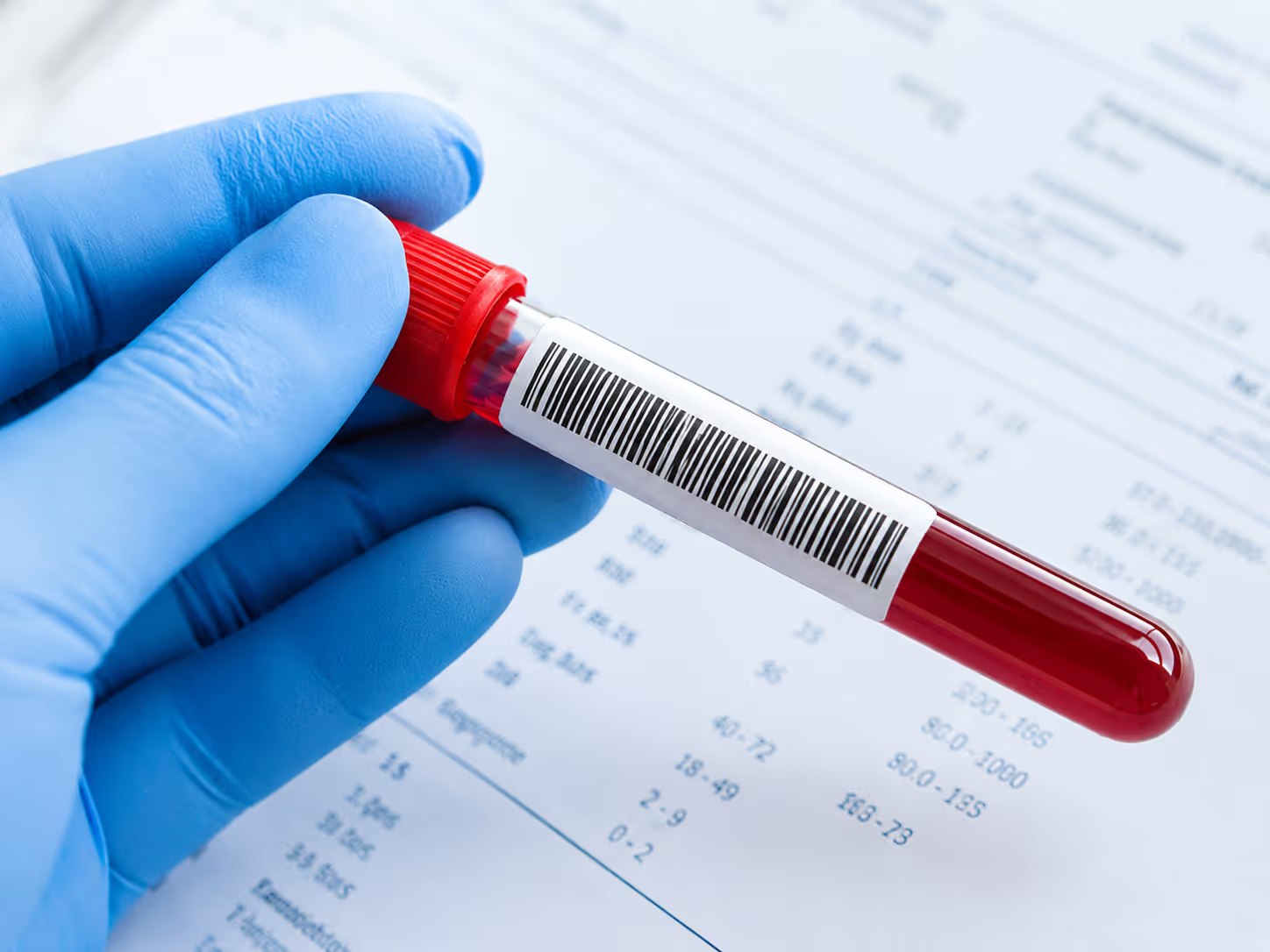
Comprehensive Lab Evaluation
Test 160+ biomarkers across thyroid, hormones, cortisol, metabolism, inflammation, and recovery.
Provider Consultation
Review your results with an RHM physician and understand what may be driving your symptoms.

Personalized Treatment Plan
Get a plan built around your labs, symptoms, physiology, and goals.
Ongoing Monitoring & Optimization
Track progress, adjust treatment, and evolve your care as your body responds.

Step
1
Step
2
Step
3
Step
4
Step
5

Physician-led thyroid care built around your full physiology.
RHM looks beyond one thyroid number to understand the hormone, metabolic, inflammatory, immune, and recovery patterns affecting how your body functions.
573+
160+
20+
Research & Insights on Thyroid

PCOS belly fat isn't the same as everyday weight gain. Here's what actually drives it — and a physician-led way to find out what's driving yours.

Thyroid supplements: what the research actually supports, what interacts with medication, and why testing comes before supplementing at RHM.

A thyroid specialist isn't defined by title — it's defined by what they check. Here's what to look for when "normal" labs don't match how you feel.
Start your journey to personalized thyroid care.
- Physician-led thyroid and hormone care
- 160+ biomarkers evaluated
- TSH, Free T3, Free T4, Reverse T3, thyroid antibodies, hormones, metabolism, inflammation, and recovery context

FAQ
Why do I still feel bad if my thyroid labs are "normal"?
Because standard thyroid screening often looks at a limited set of markers. A normal TSH does not always explain how thyroid hormone is being produced, converted, or used — or how hormones, metabolism, inflammation, cortisol, immune activity, and recovery may be influencing your symptoms. That's why some women continue experiencing fatigue, brain fog, weight changes, and poor recovery despite being told their labs are normal.
Do you only evaluate TSH?
No.
At RHM, thyroid function is evaluated within a broader physiologic context. Depending on your situation, this may include:
- TSH
- Free T3
- Free T4
- Reverse T3
- Thyroid antibodies
- Hormones
- Cortisol
- Metabolic markers
- Inflammatory markers
The goal is to understand how these systems interact rather than relying on a single thyroid value.
Can thyroid dysfunction affect weight, brain fog, and mood?
Yes.
Thyroid hormone plays an important role in energy production, metabolism, cognitive function, mood regulation, temperature control, and recovery. When thyroid signaling becomes less efficient, symptoms may include:
- Weight gain or difficulty losing weight
- Brain fog
- Low motivation
- Fatigue
- Mood changes
- Slower recovery
- Cold intolerance
These symptoms often appear together rather than in isolation.
What if I have symptoms but previous labs were "fine"?
That is one of the most common reasons patients seek a second opinion. A normal lab result does not always explain why symptoms are persisting. Many women experience fatigue, weight changes, brain fog, poor recovery, and low energy despite being told everything looks normal.
At RHM, we evaluate symptoms alongside a broader set of physiologic markers to better understand what may be contributing to how you feel.
What is the difference between "normal" and "optimal" thyroid function?
Normal usually means a lab value falls within a population reference range.
Optimal considers how your physiology is functioning and whether those values align with how you actually feel.
Two people can have identical lab values and very different symptoms. That's why RHM evaluates lab results together with symptoms, hormones, metabolism, inflammation, recovery, and overall health context.
Can stress and inflammation affect thyroid function?
Yes.
Long-term stress, elevated cortisol, chronic inflammation, nutrient depletion, and immune activity can all influence thyroid hormone production, conversion, and signaling.
Because these systems affect each other, thyroid symptoms often involve more than the thyroid itself.
How do I know if my symptoms are thyroid-related or hormone-related?
Many thyroid and hormone symptoms overlap.
Both can contribute to:
- Fatigue
- Weight gain
- Brain fog
- Mood changes
- Poor recovery
- Sleep disruption
- Low motivation
That's why RHM evaluates thyroid function alongside hormones, cortisol, metabolism, and inflammation to identify the broader physiologic pattern rather than assuming a single cause.
What labs should be checked if I'm worried about my thyroid?
Basic screening often starts with TSH, but a more comprehensive evaluation may include:
- TSH
- Free T3
- Free T4
- Reverse T3
- Thyroid antibodies
- Metabolic markers
- Cortisol markers
- Hormone markers
- Inflammatory markers
At RHM, thyroid health is evaluated within a larger assessment that may include 160+ biomarkers.
What changes when thyroid physiology is properly addressed?
Patients commonly report improvements in:
- Energy levels
- Mental clarity
- Recovery
- Mood stability
- Body composition
- Exercise tolerance
- Daily resilience
The goal is not simply to improve lab values, but to help you feel and function better.
When should I see a thyroid specialist?
Patients commonly report improvements in:
- Energy levels
- Mental clarity
- Recovery
- Mood stability
- Body composition
- Exercise tolerance
- Daily resilience
The goal is not simply to improve lab values, but to help you feel and function better.
Consider a comprehensive thyroid evaluation if:
- You continue experiencing symptoms despite "normal" labs
- Fatigue is affecting your daily life
- Brain fog is impacting work or focus
- Weight gain feels disproportionate to your habits
- Recovery has become noticeably slower
- You have a family history of thyroid disease
- Previous treatment has not resolved your symptoms
If your body keeps asking for help, it may be worth looking beyond a single thyroid number and evaluating the broader physiologic picture.