Women / Sexual health
Sexual health care rooted in physiology, not embarrassment.
Sexual health
Sexual health changes are rarely about hormones alone. At RHM, we look at desire, comfort, arousal, tissue health, stress, sleep, metabolism, and the full physiologic picture.

Your body may be trying to tell you something.
Desire may feel quieter. Intimacy may feel different. Your body may not respond the way it once did.
What you’ve been told
- “It’s just stress”
- “This is just part of getting older”
- “This is normal with aging”
Desire, comfort, and connection deserve a real conversation.
What is female sexual health?
Female sexual health is about far more than libido alone. Hormones, nervous system regulation, tissue health, stress, sleep, metabolism, and overall physiologic wellbeing all play a role.
Sexual health symptoms rarely happen in isolation.
Desire, comfort, arousal, responsiveness, and confidence are connected — which is why symptoms can feel hard to explain.
Low Desire
Less interest in intimacy, even when nothing feels wrong in your relationship.

Lower responsiveness
Your mind may be present, but your body no longer follows the same signal.
Discomfort & Dryness
Pain, dryness, or irritation that makes intimacy harder to enjoy.

Body Disconnection
Feeling less connected, confident, or present in your body.
Arousal Changes
Less sensitivity, slower arousal, or difficulty feeling fully engaged.

Hormonal Shifts
Changes during perimenopause, menopause, stress, or thyroid imbalance.
Why This Can Feel Confusing
You are not imagining it. Many women are simply never given the time to have a full conversation.
Changes often happen gradually over time.
Quietly Progressive
More Than Hormones
Hard To Talk About
Easy To Dismiss
Desire, comfort, confidence, and responsiveness often influence one another.
Deeply Connected
Different For Every Woman
Your labs can look normal while your physiology keeps changing.
Traditional labs
160+ biomarkers
A handful of hormone markers
Systems read together
Single snapshots in isolation
Thyroid, cortisol, metabolism, inflammation
Rarely included
Connected pattern
Each symptom separately
Physician-led, physiology-driven
Minimal context provided
Built around your physiology
Reactive and generalized
The conversation many women never get
Desire, comfort, and connection are medical concerns — not something to dismiss.



At RHM, female sexual health is evaluated thoughtfully and comprehensively — with attention to hormones, tissue health, stress physiology, nervous system patterns, metabolism, and your overall quality of life.
When your body shifts, intimacy can shift with it.
Sexual health is shaped by hormones, sleep, stress, blood flow, tissue health, metabolism, and nervous system regulation. When those systems shift, desire, comfort, arousal, and connection can shift too.That deserves care.
How RHM evaluates female sexual health
Private Discovery Call
We discuss what has changed, including desire, comfort, arousal, dryness, confidence, and how connected you feel to your body.

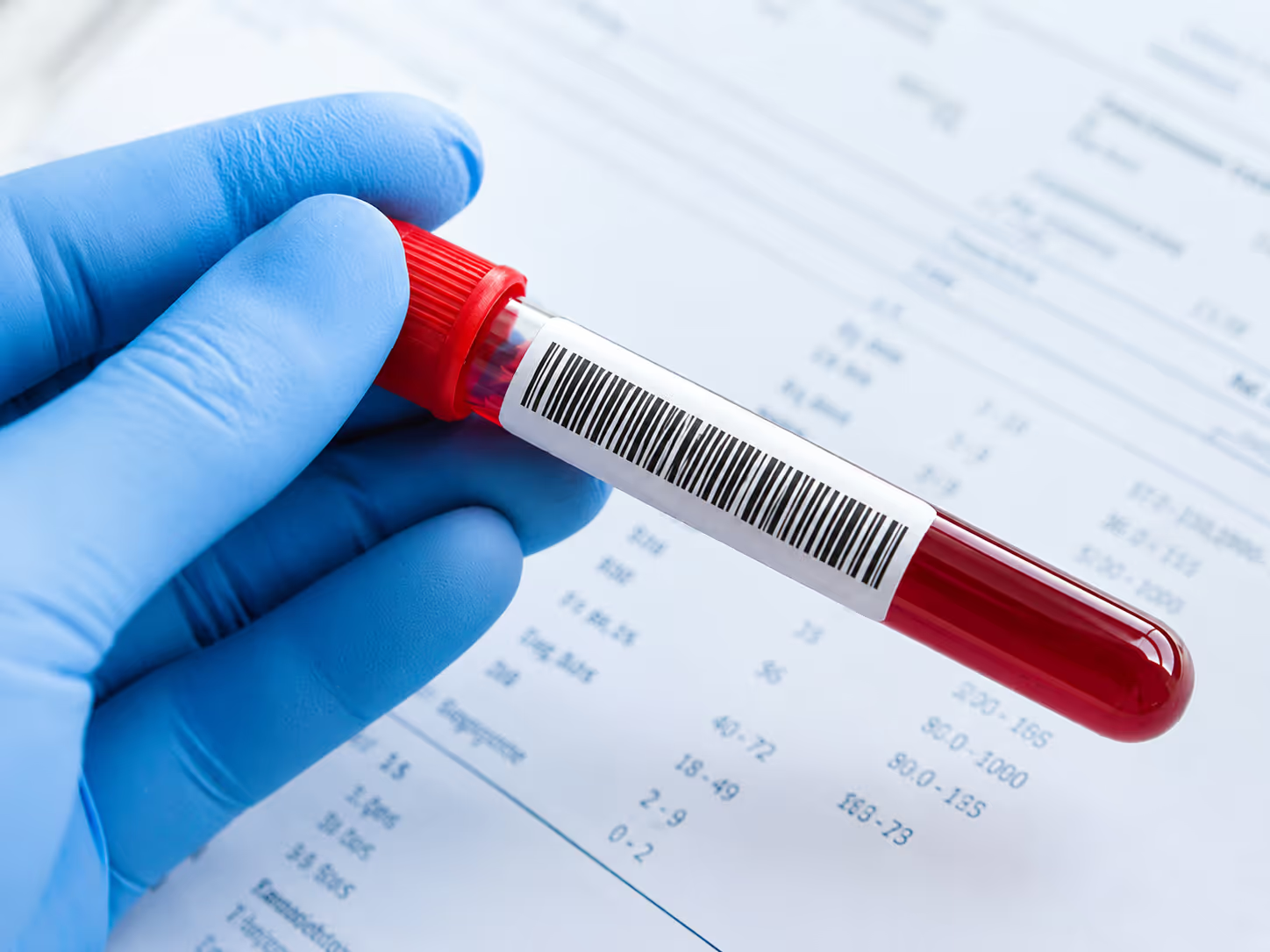
Comprehensive Lab Evaluation
We test 160+ biomarkers across hormones, thyroid, cortisol, metabolism, inflammation, and other systems that may affect sexual health.
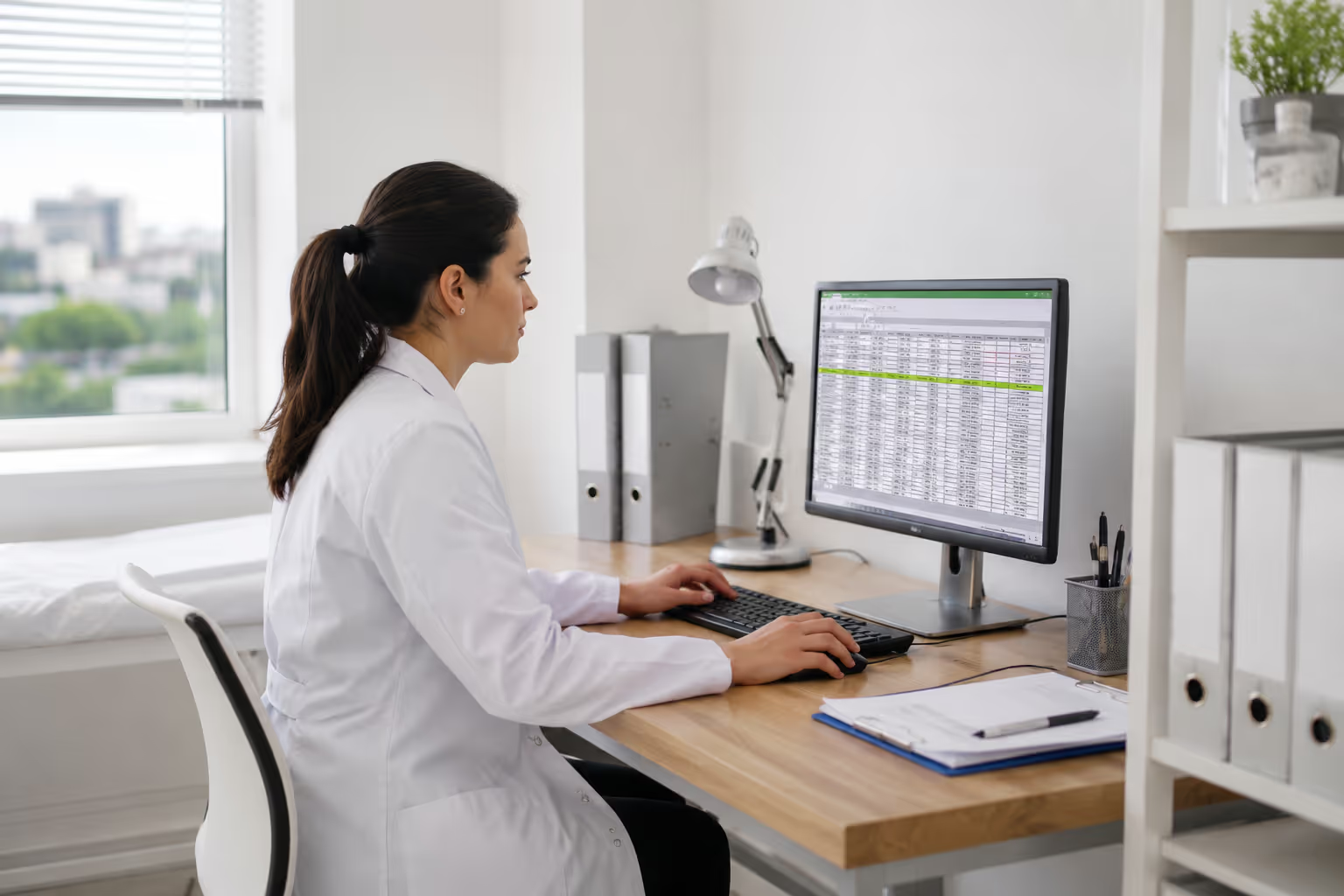
Physician Review
An RHM physician reviews your symptoms, labs, history, medications, risk profile, and goals together.

Personalized care plan
Your plan is built around what may be driving the issue, with hormonal and non-hormonal options considered when appropriate.
Ongoing monitoring
We track symptoms, labs, comfort, side effects, and progress so your care can adjust as your body changes.

Step
1
Step
2
Step
3
Step
4
Step
5

Physician-led care built around your physiology
Many women are told their symptoms are normal, emotional, or just part of aging. RHM takes a different approach. We evaluate sexual health as part of your broader physiology — including hormones, tissue health, metabolism, thyroid function, sleep, stress, and recovery.
573+
160+
20+
Start with a private conversation that takes your symptoms seriously.
- Personalized, physician-led evaluation
- Private, respectful consultation
- Hormones, tissue health, stress, and metabolism reviewed together

FAQ
Is it normal for desire to change over time?
Yes, changes in desire are common. But common does not mean they should be ignored, especially when they affect comfort, confidence, intimacy, or how connected you feel to your body.
What if I feel uncomfortable bringing sexual health up?
That is completely understandable. Many women feel awkward, embarrassed, or unsure how to describe what has changed. At RHM, this conversation is private, respectful, and medical — not judgmental, rushed, or uncomfortable.
Can hormones really affect intimacy and desire?
Yes. Estrogen, testosterone, thyroid hormones, cortisol, and other physiologic patterns can affect desire, arousal, lubrication, tissue comfort, mood, energy, and responsiveness. Sexual health is rarely controlled by one hormone alone.
What if my relationship is healthy but things still feel different?
That can happen. Low desire, discomfort, or reduced responsiveness does not always mean something is wrong in the relationship. Hormones, tissue health, nervous system regulation, stress, sleep, thyroid function, and metabolism can all change how your body responds.
Is discomfort during intimacy just part of aging?
No. Discomfort during intimacy is common, especially during perimenopause, menopause, and postmenopause, but it should not be dismissed as “just aging.” Vaginal dryness, tissue changes, pelvic floor issues, hormone shifts, inflammation, and other factors may be treatable.
Will I automatically be prescribed hormones?
No. Hormones are not automatic. RHM evaluates your symptoms, labs, history, risk profile, comfort level, and goals before making recommendations. Treatment may include hormonal or non-hormonal options depending on what is actually driving the issue.
Can low libido be a sign of a hormonal problem?
Yes. Low libido can be connected to estrogen, testosterone, thyroid function, cortisol patterns, sleep disruption, stress, medications, metabolic changes, or perimenopause and menopause. A proper evaluation helps identify whether hormones are part of the picture.
What labs should be checked for low libido or sexual health concerns?
A deeper workup may include estrogen, progesterone, testosterone, SHBG, DHEA-S, thyroid markers, cortisol patterns, metabolic markers, inflammatory markers, nutrient status, and other labs depending on your symptoms and medical history.
Is PT-141 an option for women?
PT-141, also known as bremelanotide, may be an option for some women with desire or arousal concerns, but it is not right for everyone. It works through nervous system signaling rather than hormone replacement, so candidacy, side effects, medical history, and goals need to be evaluated carefully.
What changes when the underlying physiology improves?
When the underlying physiology is properly supported, women may notice improvements in desire, comfort, lubrication, arousal, responsiveness, confidence, mood, energy, and connection with their body. The goal is not to force intimacy — it is to address what may be making it feel different, uncomfortable, or disconnected.