Men / Physician-led longevity clinic
Looking for a longevity doctor near you? Go beyond a standard physical with a physician-led evaluation of 160+ biomarkers designed to uncover risks, identify opportunities, and build a personalized strategy for your long-term health.

Feeling fine and being fully evaluated aren’t the same thing.
You can feel good, stay active, and have a “normal” physical while important changes in cardiovascular risk, metabolic health, inflammation, hormones, and other biomarkers are developing quietly beneath the surface.
What You've Been Told:
- “Your physical came back normal.”
- “Just deal with it if something new comes up.”
- “This is probably just part of getting older.”
Most chronic disease doesn’t begin the day you feel symptoms. We look across 160+ biomarkers to identify patterns, risks, and opportunities earlier—while you have more options to do something about them.
Don’t wait for symptoms to become your starting point.
What is a Longevity Clinic?
Traditional medicine asks, “Are you sick?” Longevity medicine asks, “What can we do now to help you stay healthier for longer?”
Your health is changing before you can feel it.
Many of the markers that shape long-term health can shift quietly for years. Looking across the systems together helps us identify patterns, understand risk, and see where there may be an opportunity to intervene earlier.
Cardiovascular health
Blood pressure and standard cholesterol only tell part of the story. A deeper look at lipids, inflammation, glucose regulation, family history, and other risk markers can provide a clearer picture of cardiovascular health.

Body composition and strength
Muscle and strength matter for more than appearance. Maintaining lean mass, strength, and healthy body composition becomes increasingly important to metabolic health, function, and independence as you age.
Hormones and sexual health
Hormones can influence sexual health, energy, muscle, body composition, mood, and recovery. We evaluate them as part of your larger health picture—not in isolation.

Cognitive health
Brain health doesn't begin when memory becomes a problem. Metabolic health, sleep, inflammation, cardiovascular factors, hormones, and other inputs can all influence how your brain functions over time.
Metabolic health
Insulin resistance and metabolic dysfunction can develop long before obvious symptoms. We look for changes in glucose regulation, insulin sensitivity, lipids, inflammation, and other metabolic markers.

Energy, sleep, and recovery
How you sleep, recover, and perform can provide useful information about your overall health. Changes here can help us identify patterns worth investigating—not simply symptoms to push through.
Why standard longevity care often falls short
Why your annual physical only tells part of the story
Hormone therapy conversations changed over time as deeper analysis, updated approaches, and individualized treatment strategies evolved. Today, thoughtful hormone care considers far more than a single study or one generalized recommendation.
Screening for disease
Beyond "Normal"
Your Goals Matter
The whole picture
“Normal” results can still leave important questions unanswered.
Your labs can be “normal” and still not tell you where your health is headed. A longevity evaluation adds context—looking at your baseline, your trends, and how key systems are working together to help you make smarter decisions about your health now and for the years ahead.
Standard workup
160+ biomarkers
A handful of hormone markers
Systems read together
Single markers in isolation
One connected pattern
Each symptom on its own
Physician-led, physiology-driven
Minimal context
Built around your physiology
Reactive and generalized
Why wait for something to feel wrong?
You can feel strong, stay active, perform well, and walk out of your annual physical with no major concerns. That doesn’t mean there’s nothing worth knowing. Changes in cardiovascular risk, metabolic health, inflammation, hormones, and other biomarkers can begin long before they noticeably change how you feel. Longevity medicine gives you the opportunity to see more now—while the goal is still to protect your health, not simply respond to a problem.


More data isn’t the goal. Better decisions are. Longevity medicine isn’t about chasing every biomarker. It’s about establishing your baseline, identifying meaningful patterns, and using that information with your physician to decide what deserves attention now, what should be tracked over time, and what doesn’t need intervention at all.
Why men start looking beyond the annual physical
Usually, it isn’t one dramatic change. It’s a collection of smaller ones that become harder to explain away — or simply the realization that “nothing is wrong” isn’t the same as knowing where your health stands.
Our Approach to Longevity Care
Discovery Call
Review your history, concerns, risk factors, and what you want to understand or improve.

Comprehensive Lab Evaluation
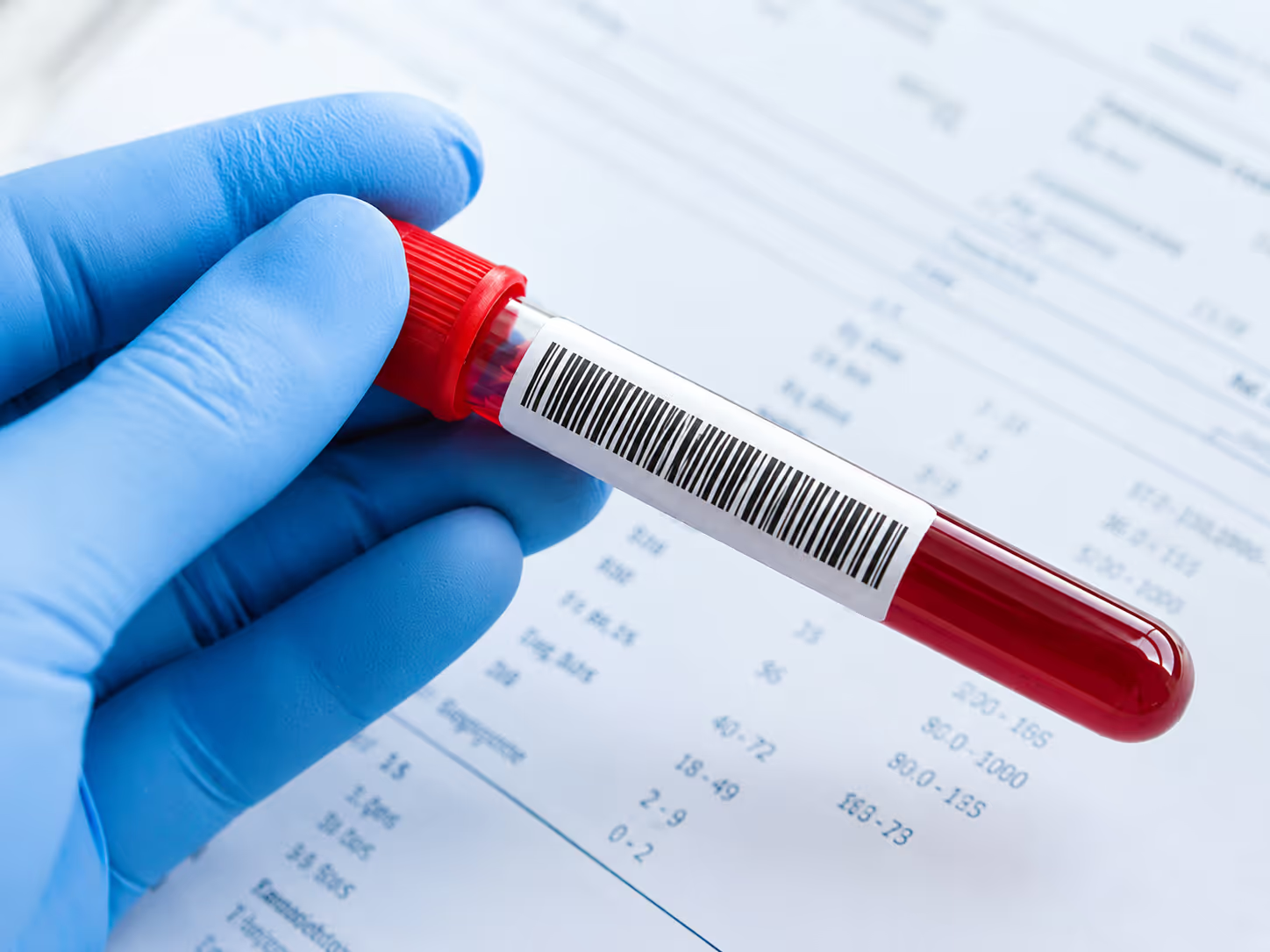
Evaluate 160+ biomarkers across cardiovascular, metabolic, hormonal, inflammatory, and other key systems.
Physician Review
Your physician looks at your results in context to identify meaningful patterns and priorities.

Personalized Plan
Build a plan around what needs attention now, what to track, and what may not need intervention.

Ongoing Monitoring
Track changes over time and adjust your care as your health, results, and goals evolve.

Step
1
Step
2
Step
3
Step
4
Step
5

Physician-led longevity care built around your physiology
RHM combines comprehensive testing with physician interpretation to understand how your hormones, metabolism, cardiovascular health, inflammation, and recovery work together.
573+
160+
20+
Start with a clearer picture of your health.
- Comprehensive, physician-led longevity evaluation
- 160+ biomarkers evaluated together
- A plan built around your findings, goals, and long-term health

FAQ
What is a longevity clinic?
A longevity clinic takes a broader view of the factors that can influence health and function over time. At RHM, that means evaluating relevant hormonal, metabolic, cardiovascular, inflammatory, and physiologic markers together, then using your history, symptoms, goals, and results to determine what deserves attention.
How is a longevity evaluation different from a regular physical?
A regular physical is essential for routine screening, preventive care, and diagnosing medical problems. A longevity evaluation adds a deeper layer of testing and interpretation designed to establish a broader baseline and look at how multiple systems and risk factors interact over time. It is intended to complement, not replace, your primary medical care.
What does a longevity evaluation for men actually test?
The exact evaluation depends on the individual. RHM may evaluate more than 160 biomarkers spanning hormones, metabolic health, cardiovascular risk, inflammation, thyroid function, nutrient status, and other relevant areas. Your physician determines which results matter in the context of your history and goals.
Is a longevity clinic the same as testosterone therapy?
No. Testosterone is only one part of men's health. A longevity evaluation looks more broadly at your physiology before deciding whether any treatment is appropriate. If hormonal findings warrant additional evaluation or treatment, your physician can discuss those options with you.
Do I need symptoms or an existing diagnosis?
No. Some men seek a longevity evaluation because something has changed in how they feel or perform. Others simply want a more comprehensive understanding of their current health and a baseline they can follow over time.
How often should men get a longevity evaluation?
There is no single schedule that is appropriate for everyone. How often you should repeat testing or meet with your physician depends on your age, medical history, risk factors, initial findings, goals, and whether you are actively being treated or monitored.