Women / Weight Loss Resistance
Weight loss resistance starts with physiology. So does the solution.
Weight Loss Resistance
You're not doing anything wrong. Your physiology has changed. We find out exactly how and build care around it.

You have tried to do everything right.
You adjusted your diet. Increased your activity. Stayed consistent longer than most people would. And still, your body is not responding the way it used to.
You've been told:
- “You just need to be stricter”
- “Eat less and move more”
- “Your labs look normal”
But effort is not always the missing piece.
What is Weight Loss Resistance?
Weight loss resistance isn't about willpower or effort. It happens when the underlying systems that regulate how your body burns fat, stores energy, and responds to food and exercise have shifted and no amount of trying harder changes that.
Weight loss resistance often shows up as more than weight gain.
Many women first notice that their body feels less predictable. Energy, cravings, recovery, body composition, and motivation all begin changing together.
Weight & Body Composition
Unexplained weight gain, harder fat loss, abdominal weight gain, reduced muscle tone

Energy & Cravings
Energy crashes, stronger cravings, blood sugar swings, feeling drained after meals
Metabolism
Slower response to diet and exercise, metabolic slowdown, less predictable results

Recovery & Resilience
Slower recovery from workouts, lower stamina, feeling more physically taxed
Hormones & Mood
Changes during perimenopause or menopause, lower motivation, mood shifts, disrupted sleep

Thyroid & Inflammation
Feeling cold, puffy, inflamed, tired, or “off” even when basic labs look normal
Why it keeps compounding
Weight loss resistance is rarely caused by one isolated issue.
When several systems shift together, the combined effect on how your body burns fat and stores energy is far greater than any single cause. That is why the same habits that used to work suddenly stop producing results.
Insulin resistance
Hormonal changes
Thyroid dysfunction
Cortisol dysregulation
Metabolic slowdown
Inflammation
Your labs can look normal while your physiology keeps changing.
Traditional labs
160+ biomarkers
A handful of hormone markers
Systems read together
Single snapshots in isolation
Connected pattern
Each symptom separately
Physician-led, physiology-driven
Minimal context provided
Built around your physiology
Reactive and generalized
Why Standard Advice Falls Short
“Eat less, move more” does not explain what many women are actually experiencing.



Weight loss resistance is a physiologic pattern, not a discipline problem. We evaluate the systems that influence how your body stores fat, burns fuel, and responds to effort. Because the answer was never about trying harder.
Why it becomes harder to ignore
At first, many women adapt. You push through fatigue. You normalize slower results. You work around lower energy. You tell yourself you probably just need to try harder. But over time, the disconnect between effort and response starts affecting more than weight.
Long-Term Metabolic Health
When insulin, hormones, thyroid function, inflammation, recovery, and body composition shift together, the impact can extend beyond the scale.
When several systems shift together, the combined effect on how your body burns fat and stores energy is far greater than any single cause. That is why the same habits that used to work suddenly stop producing results.

Energy stability

Muscle maintenance

Recovery capacity

Blood sugar regulation

Inflammation response

Long-term metabolic health
How RHM Treats Weight Loss Resistance
Discovery Call
Discuss symptoms, history, and whether deeper evaluation makes sense.

Comprehensive Lab Evaluation
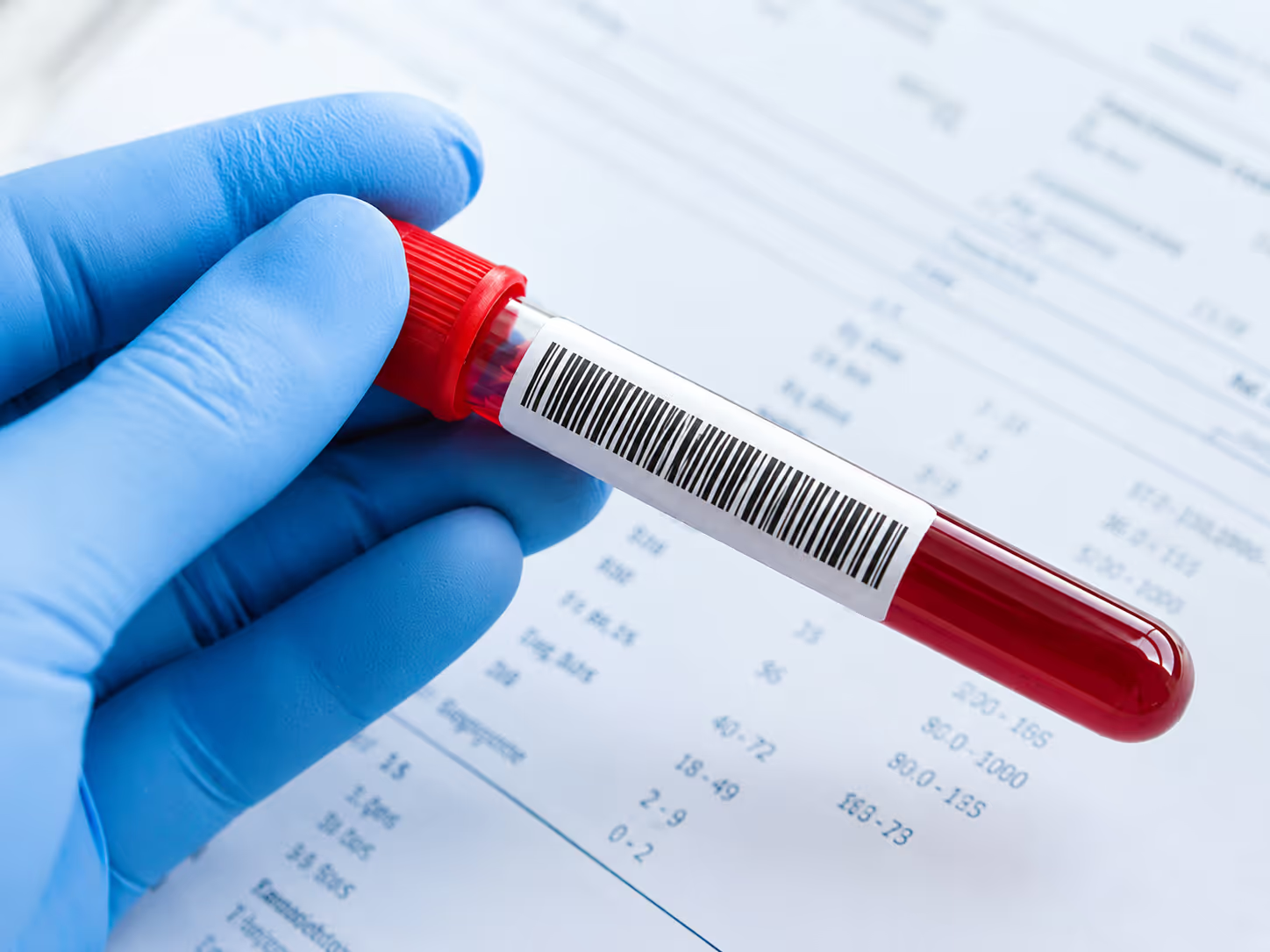
Test 160+ biomarkers across hormones, thyroid, cortisol, metabolism, and inflammation.
Provider Consultation
Review your results with an RHM physician and understand what may be driving your symptoms.

Personalized Plan
Get a treatment plan built around your labs, symptoms, physiology, and goals.

Ongoing Monitoring
Adjust your care over time as your body responds and your needs change.

Step
1
Step
2
Step
3
Step
4
Step
5

Physician-led care built around your metabolic physiology.
Most women who come to RHM are already trying. We look deeper at the hormone, insulin, thyroid, metabolic, inflammation, stress, and recovery patterns that may be affecting how their body responds.
573+
160+
20+
Research & Insights on Peptide Therapy

PCOS belly fat isn't the same as everyday weight gain. Here's what actually drives it — and a physician-led way to find out what's driving yours.

Metabolic testing can mean a lot of things. Here's what RHM actually checks — and why one number rarely tells the full story.

Wondering how insulin resistance is actually tested? A physician-led look at what a real panel checks, at-home options, and what the results can mean.

Insulin resistance and weight loss: why cutting calories won't move the scale, how high insulin blocks fat loss in women, and what to check with your doctor.

Not losing weight on Ozempic, or gaining it back? A physician-led look at why the scale stalls: metabolic adaptation, muscle loss, thyroid, and insulin.

Is semaglutide a peptide? Yes, and the GLP-1 behind Ozempic, Wegovy, and Rybelsus. A physician-led look at what it is, how it works, and who it's for. Book a call.
Start your journey to personalized weight loss resistance care.
- Physician-led metabolic and hormone care
- 160+ biomarkers evaluated
- Insulin, hormone, thyroid, cortisol, inflammation, and recovery context

FAQ
Why am I gaining weight even though my habits have not changed?
Hormone shifts, insulin resistance, thyroid dysfunction, inflammation, chronic stress, sleep disruption, reduced muscle mass, and metabolic changes can all affect how your body regulates weight and responds to effort — even when your routines stay consistent.
Why does it feel like my body stopped responding?
Because the relationship between effort and outcome can change when the underlying physiology changes. If insulin, hormones, thyroid, cortisol, inflammation, or recovery are out of balance, your body may store fat more easily, burn fuel less efficiently, and recover more slowly than it used to.
Is this just about calories?
Calories matter, but they are not the whole story. The standard “eat less, move more” advice assumes your body responds predictably to calorie changes. Insulin resistance, hormone shifts, thyroid dysfunction, inflammation, poor sleep, and chronic stress can all change how your body uses and stores energy.
Why does weight resistance often begin during perimenopause or menopause?
Perimenopause and menopause can affect estrogen, progesterone, insulin sensitivity, thyroid function, cortisol patterns, muscle mass, sleep, and recovery. These changes can make weight easier to gain and harder to lose, especially around the abdomen.
How do I know if my weight gain is hormonal?
Hormonal weight gain often shows up with other symptoms, such as irregular cycles, hot flashes, night sweats, fatigue, brain fog, low libido, mood changes, poor sleep, sugar cravings, or stubborn abdominal weight. Testing can help identify whether hormones, thyroid, insulin, cortisol, or inflammation are part of the pattern.
What labs should be checked if I cannot lose weight?
A deeper workup may include fasting insulin, fasting glucose, HbA1c, HOMA-IR, thyroid markers such as TSH, free T3, free T4, reverse T3, thyroid antibodies, cortisol markers, inflammatory markers like hs-CRP, ferritin, sex hormones, metabolic markers, and nutrient levels. At RHM, testing looks at 160+ biomarkers and interprets them alongside your symptoms.
Why am I in a calorie deficit but not losing weight?
A calorie deficit may not lead to predictable weight loss if your body is dealing with insulin resistance, thyroid dysfunction, chronic stress, poor sleep, inflammation, hormone changes, low muscle mass, or impaired recovery. The issue may not be effort — it may be that your body is no longer responding the way it used to.
Will I automatically be prescribed medication or GLP-1 therapy?
No. RHM is not a prescription-first weight loss clinic. GLP-1 medications may be appropriate for some patients, but they are not automatic. The right plan depends on your symptoms, labs, medical history, risk profile, goals, and what your body is most likely to respond to.
What changes when the underlying physiology improves?
When the underlying physiology is better supported, the body may begin responding more predictably again. Energy, cravings, sleep, recovery, body composition, inflammation, and weight regulation can all improve when the right systems are addressed together instead of treating weight as a willpower problem.