Women / PCOS Treatment
PCOS care for when symptom management is no longer enough.
PCOS Treatment
Many women are told to manage PCOS symptoms without understanding what drives them. At RHM, we evaluate hormones, insulin resistance, thyroid function, inflammation, metabolism, stress, and long-term goals to build more personalized care.

Managing symptoms is not the same as understanding why they happen.
Cycles feel unpredictable. Weight feels harder to lose. Cravings feel overwhelming. Energy crashes hit harder than they should.
Common Concerns:
- “Just lose weight”
- “Birth control should help”
- “Your labs look normal”
PCOS symptoms rarely happen in isolation. Hormones, metabolism, inflammation, and insulin signaling often overlap together.
PCOS care should begin with understanding the full picture.
What is PCOS?
PCOS is a metabolic and hormonal condition where insulin resistance, androgens, inflammation, metabolism, and ovarian function can affect each other at the same time.
PCOS symptoms rarely happen one at a time.
Hormonal, metabolic, inflammatory, and insulin-related changes often overlap — which is why symptoms can feel connected.
Irregular Cycles
Periods that are unpredictable, absent, heavy, or difficult to track.

Weight Resistance
Weight that does not respond proportionally to food, exercise, or effort.
Cravings & Energy Crashes
Blood sugar swings that make cravings feel physical, not psychological.

Skin & Hair Changes
Acne, hair thinning, unwanted hair growth, or skin changes that keep returning.
Inflammation & Fatigue
Feeling puffy, inflamed, foggy, tired, or harder to recover than expected.

Hormonal Imbalance
Androgen, thyroid, cortisol, and reproductive hormone patterns that may interact together.
Why standard care often falls short?
You are not failing. The full picture may not be getting evaluated.
Cycles, acne, weight, and fertility are often treated separately.
Too Symptom-Based
Underevaluated
Oversimplified
Too Narrow
Care often starts after symptoms worsen instead of identifying patterns early.
Reactive
Generalized
Effective PCOS care begins by identifying the physiologic patterns beneath the symptoms.
Traditional labs
160+ biomarkers
Limited or symptom-based intake
Systems read together
Symptoms reviewed separately
Insulin, hormones, thyroid, inflammation, metabolism
Often focused on cycles or fertility
Metabolic drivers evaluated
Often treated as behavior alone
Built around your physiology
Standardized protocol
Monitored and adjusted over time
Reactive and generalized
What is often missed
PCOS care should look beyond the loudest symptom.



At RHM, we evaluate your symptoms, labs, insulin signaling, hormones, metabolism, thyroid function, inflammation patterns, and long-term health goals together before building your care plan.
You can only compensate for so long before managing symptoms is no longer enough.
You may already be paying attention to the food, the workouts, the sleep, the cravings, and the cycles. But when symptoms continue stacking together, it may point to a deeper physiologic pattern.
How RHM evaluates PCOS
Discovery Call
We review your PCOS symptoms, cycle patterns, weight changes, cravings, energy, history, and goals.

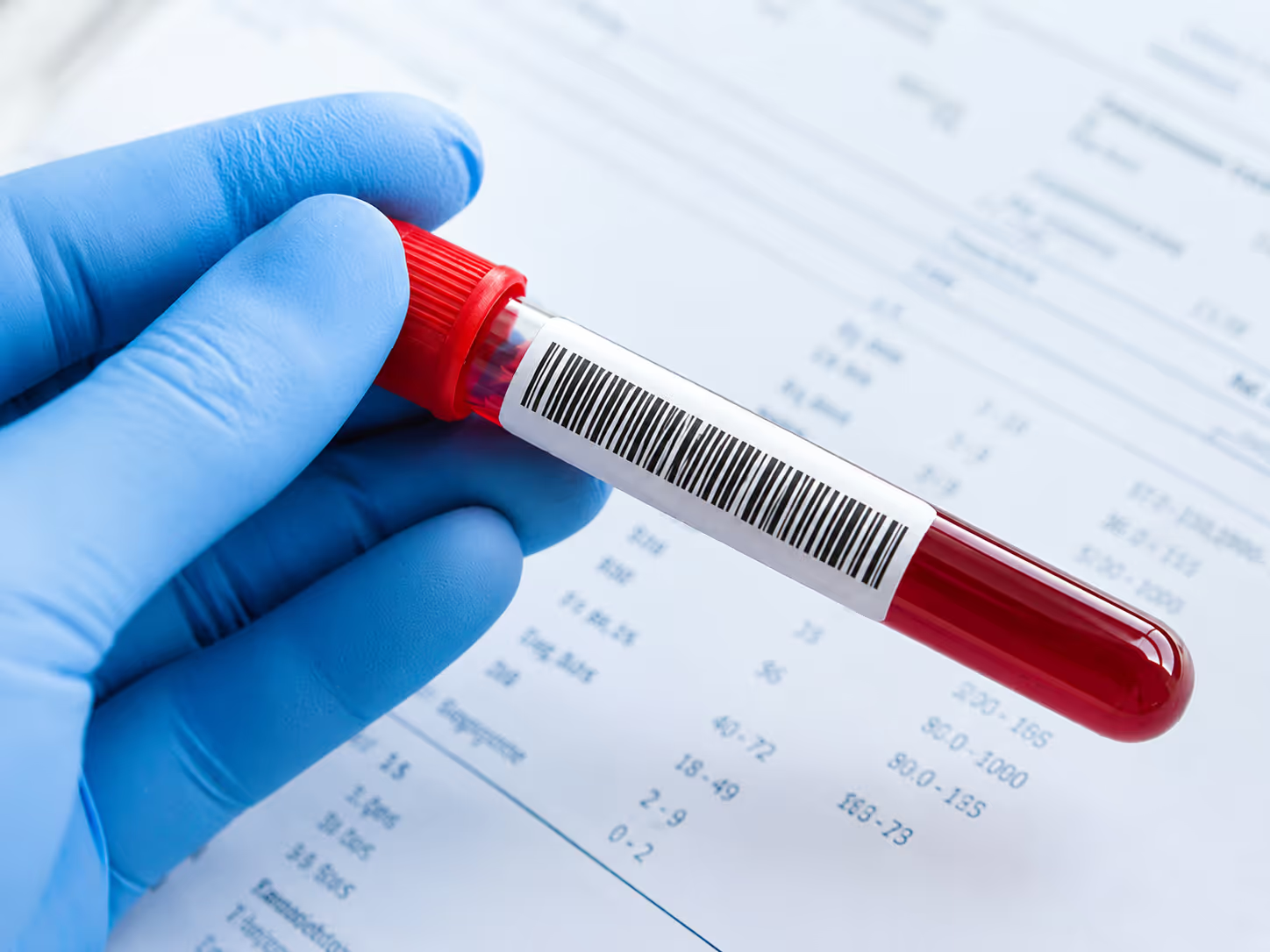
Comprehensive Lab Evaluation
We test 160+ biomarkers across insulin, hormones, thyroid, cortisol, metabolism, inflammation, and recovery.
Physician Review
An RHM physician reviews your labs, symptoms, history, risk profile, and long-term health goals together.

Personalized care plan
Your plan is built around your physiology, not a standard PCOS protocol.

Ongoing monitoring
We track symptoms, labs, cycles, cravings, energy, weight response, side effects, and progress over time.

Step
1
Step
2
Step
3
Step
4
Step
5

Physician-led care built around your physiology
RHM starts with the pattern underneath your symptoms. We evaluate insulin resistance, hormones, inflammation, metabolism, thyroid function, stress physiology, and recovery together — then build care around what your body is actually doing.
573+
160+
20+
Research & Insights on PCOS

How to lose weight with PCOS when standard advice hasn't worked: the physiology most plans miss, and a physician-led way to find what's driving it.

The pill isn't the only path with PCOS. A physician-led comparison of birth control options and what else actually helps — beyond the prescription pad.
Start with clarity before committing to another protocol.
- Personalized, physician-led PCOS evaluation
- Insulin, hormones, metabolism, and inflammation reviewed together
- Advanced testing and clear next steps

FAQ
Is PCOS only a hormone problem?
Not usually. For many women, PCOS involves hormones, insulin resistance, inflammation, metabolism, thyroid function, and stress physiology working together. That is why treating only one symptom often does not address the full pattern.
Why does weight feel so difficult with PCOS?
PCOS can make weight harder to manage because insulin resistance, androgen changes, inflammation, sleep disruption, cravings, and metabolic shifts can all affect how your body stores fat and responds to diet and exercise. It is not just a discipline problem.
Can I have PCOS if my labs were called “normal”?
Yes. PCOS can still be present even if previous labs were called “normal,” especially if testing was limited or not interpreted alongside your symptoms. A deeper evaluation may look at insulin, androgens, thyroid markers, inflammation, metabolic health, cycle patterns, and clinical symptoms together.
Is birth control the only treatment option?
No. Birth control may help manage cycles or symptoms for some women, but it is not the only option. PCOS treatment may also include insulin-sensitizing support, nutrition, lifestyle changes, inositol, metformin, GLP-1 medications when appropriate, hormone support, inflammation management, thyroid evaluation, and stress physiology support.
Can PCOS affect more than fertility?
Yes. PCOS can affect cycles, skin, hair growth, scalp hair thinning, weight, cravings, mood, energy, insulin sensitivity, inflammation, and long-term metabolic health. Fertility matters, but PCOS is not only a fertility condition.
Why do cravings feel so intense?
Cravings with PCOS are often connected to insulin resistance and blood sugar instability. When glucose and insulin patterns fluctuate, your body may push you toward fast energy, especially sugar or refined carbohydrates. Poor sleep, stress, inflammation, and under-eating protein can make cravings stronger.
What are the main PCOS subtypes?
The four commonly discussed PCOS patterns are insulin-resistant PCOS, inflammatory PCOS, adrenal PCOS, and post-pill PCOS. These are not always perfectly separate, and some women have overlap. Identifying the dominant pattern can help guide a more personalized treatment plan.
Can PCOS be reversed?
PCOS is usually managed rather than “cured,” but many symptoms and metabolic patterns can improve significantly with the right care. Cycles, cravings, weight resistance, skin symptoms, inflammation, insulin sensitivity, and energy may improve when the underlying physiology is addressed.
What labs should be checked for PCOS?
A deeper PCOS workup may include fasting insulin, fasting glucose, HbA1c, HOMA-IR, lipid panel, total and free testosterone, DHEA-S, SHBG, LH, FSH, estradiol, progesterone, thyroid markers, inflammatory markers, vitamin D, ferritin, and other labs based on symptoms and medical history.
Will I automatically be prescribed medication?
No. Medication is not automatic. RHM evaluates your symptoms, labs, history, goals, and PCOS pattern before making recommendations. Some patients may benefit from medication, while others may start with nutrition, lifestyle, supplements, metabolic support, inflammation work, or hormone-focused care.