Women / Women's Peptide Therapy
Peptide therapy should start with your biology — not a one-size-fits-all protocol.
Women's Peptide Therapy
At RHM, peptide therapy is never a generic protocol. We evaluate your labs, symptoms, goals, hormones, inflammation, and overall health first — then determine whether peptides make sense for your body.

It should not feel this difficult to get through your day.
You may still be functioning at a high level on the outside. But internally, things feel harder than they used to. Sleep happens, but does not fully restore you. Workouts take longer to recover from. Inflammation lingers. Stress hits harder. Your metabolism feels less responsive. Your body feels like it needs more effort for less return.
Common Concerns:
- “Your labs are fine.”
- “You just need to be more consistent.”
- “Everyone feels tired at this age.”
- “It’s probably stress.”
Certain peptides are being studied for their potential role in:
- Recovery and repair signaling
- Sleep quality and resilience
- Metabolic function
- Body composition support
- Inflammation modulation
- Cellular communication and healing pathways
But peptide therapy should begin with physiology — not marketing.
Your symptoms deserve a more proactive approach.
What is peptide therapy?
Peptides are signaling molecules that help regulate recovery, metabolism, repair, inflammation, sleep, and resilience within the body. At RHM, peptide therapy is guided by your physiology, not generic protocols or trends.
Different peptides support different systems in the body.
That is why the right starting point is not choosing a trend — it is understanding what your body may actually need support with.
Metabolism & Metabolic Health
May support metabolic signaling, appetite regulation, insulin sensitivity, and energy utilization.

Recovery & Tissue Repair
May support healing, recovery capacity, inflammation balance, and tissue repair signaling.
Sleep & Nervous System Recovery
May support deeper sleep, restorative recovery, nervous system regulation, and resilience to stress.

Body Composition & Muscle Preservation
May support lean muscle maintenance, recovery, strength, healthy aging, and metabolic resilience.
Sexual Health & Intimacy
May support libido, arousal, sexual wellness, circulation, and intimacy-related physiology in select patients.

Cognitive Function & Resilience
May support focus, cognitive clarity, mental performance, stress adaptation, and neurologic resilience.
Why Peptide Therapy Often Misses The Mark
You are not looking for another internet protocol. You are looking for care that understands your physiology and your goals.
Peptides are often recommended before the full physiologic picture is understood.
Trend Driven
Incompletely Evaluated
Quality Matters
Overgeneralized
Peptides should support the broader care plan — not replace it.
Detached From the Bigger Picture
Applied Too Early
Your labs can look normal while your physiology keeps changing.
Traditional labs
160+ biomarkers
A handful of hormone markers
Systems read together
Single snapshots in isolation
Connected pattern
Each symptom separately
Physician-led, physiology-driven
Minimal context provided
Built around your physiology
Reactive and generalized
The part most peptide pages skip
Peptide quality matters. So does the way your care is evaluated, sourced, and monitored.



At RHM, peptide therapy is never reduced to a protocol. We evaluate your labs, symptoms, history, sourcing, risks, and goals before deciding whether peptides make sense.
You can only explain it away for so long.
You have been trying to make sense of it. The stress. The season. The age. The busy schedule. The workouts. The sleep that technically happens but does not restore you. But the explanations stop fitting after a while. It is not dramatic. It is just relentless.
How RHM evaluates peptide therapy
Discovery Call
We discuss your symptoms, goals, health history, recovery patterns, and whether peptide therapy is worth evaluating.

Comprehensive Lab Evaluation
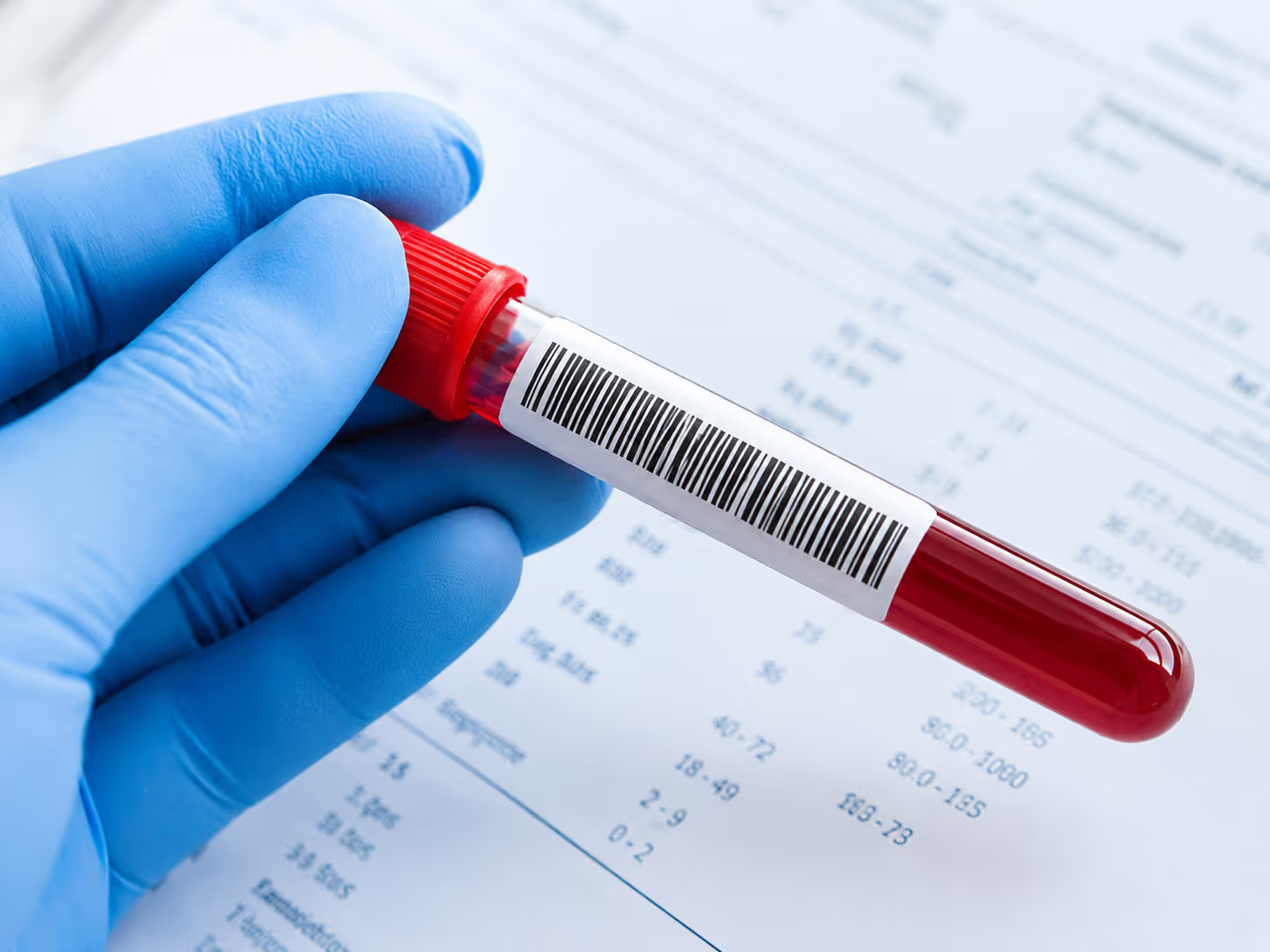
We test 160+ biomarkers across hormones, thyroid, cortisol, metabolism, inflammation, and recovery.
Physician Review
An RHMMed physician reviews your labs, symptoms, risk profile, and medical history together.

Personalized care plan
If peptide therapy makes sense, your plan is built around your physiology, goals, sourcing, dosing, and broader care needs.
Ongoing monitoring
We track symptoms, labs, side effects, and progress so your plan can adjust as your body responds.

Step
1
Step
2
Step
3
Step
4
Step
5

Physician-led care built around your physiology
Many peptide clinics start with a protocol. RHM starts with your physiology — then considers peptides only when they make sense.
573+
160+
20+
Research & Insights on Peptide Therapy

Peptide therapy and TRT work differently and solve different problems. See how RHM decides which fits your labs, symptoms, and goals — not a template.

Peptides vs GLP-1: which one actually fits your goals — appetite, muscle, or metabolism? A physician-led comparison, not a sales pitch.

Not losing weight on Ozempic, or gaining it back? A physician-led look at why the scale stalls: metabolic adaptation, muscle loss, thyroid, and insulin.
Start with clarity before starting a protocol.
- Personalized, physician-led evaluation
- Advanced testing and clear next steps
- Careful sourcing and medical supervision

FAQ
Are peptides safe?
Safety depends on the specific peptide, your medical history, dosing, sourcing quality, physician oversight, and ongoing monitoring. Peptides should never be approached casually or purchased through unverified online sources. When used, they should be prescribed carefully, sourced through legitimate pharmacies, and monitored by a qualified provider.
Are peptides the same as hormones?
No. Peptides and hormones are both signaling molecules, but they are not the same thing. Hormones typically have broader systemic effects, while peptides are short chains of amino acids that can signal specific physiologic pathways. In some cases, peptide therapy may support hormone-related systems, but it does not replace proper hormone evaluation or treatment.
Will everyone benefit from peptide therapy?
No. Peptide therapy is not appropriate for every patient and should not be treated as a universal solution. Whether it makes sense depends on your symptoms, goals, labs, medical history, risk profile, and whether there is a clear physiologic reason to consider it.
Are peptides FDA-approved?
Some peptide-based therapies are FDA-approved for specific uses. Others may be compounded under physician supervision, while some are restricted or not appropriate for clinical use. This is why regulatory status, sourcing, and medical oversight matter. Not every peptide discussed online is safe, legal, or appropriate for patient care.
Can peptide therapy replace hormone therapy or other treatment?
Usually, no. Peptide therapy should not be used as a shortcut or replacement for proper medical care. In some cases, peptides may be considered as part of a broader plan that includes hormone care, metabolic support, recovery work, nutrition, sleep, inflammation management, or other treatment. The right approach depends on what your body actually needs.
Why is physician supervision important?
Physician supervision helps ensure the right peptide is selected, the dose is appropriate, the source is legitimate, and your response is monitored over time. It also helps identify when peptide therapy is not appropriate or when another issue — such as thyroid dysfunction, hormone imbalance, insulin resistance, inflammation, or poor recovery — should be addressed first.
How do I know if a peptide source is legitimate?
A legitimate peptide source should involve a licensed medical provider, a credentialed compounding pharmacy, clear dosing instructions, quality controls, sterility standards, and transparent documentation. Be cautious with research-grade peptides, direct-to-consumer peptide websites, vague “medical-grade” claims, or any provider that skips labs and medical history.
What labs should be checked before peptide therapy?
The right labs depend on the goal of treatment, but a deeper evaluation may include hormones, thyroid markers, metabolic markers, fasting insulin, glucose, HbA1c, lipids, inflammatory markers, recovery-related markers, and sometimes growth hormone axis markers such as IGF-1. At RHM, peptide therapy is considered in the context of a broader physiologic evaluation, not in isolation.
What changes when peptide therapy is used appropriately?
When peptide therapy is appropriate and properly monitored, patients may notice improvements in areas such as recovery, body composition, metabolic regulation, sleep, libido, inflammation, or energy. The exact outcome depends on the peptide used, the reason it was selected, and whether the underlying physiology supports that treatment.
Will I automatically be prescribed peptides?
No. Peptides are not automatic. RHM evaluates whether peptide therapy makes sense based on your symptoms, labs, health history, goals, and risk profile. If peptides are not appropriate, the recommendation may focus on other areas first, such as hormones, thyroid function, metabolism, sleep, inflammation, nutrition, or recovery.