
Summary
- Estrogen decline changes fat storage. As estrogen drops, your body shifts toward storing fat around your abdomen instead of your hips and thighs — a pattern diet and exercise alone don't fully explain.
- Muscle loss slows your metabolism. Perimenopause tends to accelerate muscle loss, and muscle is what keeps your resting calorie burn higher.
- Insulin sensitivity often shifts too. Many women become more insulin resistant during this transition, which makes weight easier to gain and harder to move.
- Sleep and cortisol play a real role. Poor sleep and elevated stress hormones compound the hormonal shift — a driver most articles on this topic barely mention.
- This is physiology, not personal failure — and individualized evaluation, not a generic diet plan, is the honest next step.
Why perimenopause causes weight gain
Estrogen does more than regulate your cycle — it also influences where and how your body stores fat, and how efficiently you burn calories at rest. As estrogen production becomes less consistent through perimenopause, that regulation shifts, and many women notice weight changes even when nothing else in their routine has. The National Institute on Aging notes this hormonal transition brings measurable changes in body composition for most women — it's a documented physiological pattern, not an individual failing.
Why it tends to go to the belly
Before perimenopause, estrogen tends to direct fat storage toward the hips and thighs — subcutaneous fat, just under the skin. As estrogen declines, that pattern often shifts toward visceral fat, stored deeper around your abdominal organs. That's why the shape of the weight gain can feel different from anything you've experienced before, even at a similar number on the scale.
That shift is measurable, not just a feeling. A four-year study of women tracked through the menopause transition with CT imaging at Pennington Biomedical Research Center found visceral fat area rose roughly 11%, with most of that gain concentrated in the years right around the final period — while subcutaneous fat increased gradually in every group, regardless of menopause status. The distinction matters: it's specifically the visceral shift that tracks with the hormonal transition, not fat gain in general.
The muscle-metabolism connection
Muscle mass naturally tends to decline with age, and that decline often accelerates during perimenopause. Because muscle tissue burns more calories at rest than fat tissue does, less muscle means your body needs fewer calories to maintain its weight — which can make the same eating pattern that worked for years start to show up differently on your body.

The insulin resistance link
Many women become more insulin resistant during this transition, meaning their cells respond less efficiently to insulin and store fat more readily as a result — a mechanism the National Institute of Diabetes and Digestive and Kidney Diseases also documents as a direct driver of weight gain. It's connected to the same hormonal shift driving the other changes, and not a separate problem. It often overlaps with the chronic inflammation that tends to rise during this same transition. If insulin resistance sounds like it might be part of your picture, RHM's weight loss resistance care page covers how that's evaluated and addressed.
The gut microbiome's role: the estrobolome
There's a piece of this most articles on perimenopause weight gain leave out entirely: your gut bacteria help manage how much estrogen actually stays in circulation. A specific set of gut microbes, sometimes called the estrobolome, produce an enzyme that lets already-processed estrogen get reabsorbed instead of cleared out — effectively recirculating it. A 2022 analysis of over 2,300 women and men from the Hispanic Community Health Study/Study of Latinos found postmenopausal women had a measurably lower abundance of that enzyme compared with premenopausal women, and the specific bacteria depleted after menopause were linked to lower HDL cholesterol and higher waist circumference. It's association-level evidence, not a settled cause-and-effect you can act on with a probiotic alone — but it's a real example of a mechanism "eat less, move more" was never built to address.
Sleep, stress, and cortisol
Declining estrogen can disrupt sleep quality on its own, and poor sleep raises cortisol — a stress hormone that, when chronically elevated, is linked to increased abdominal fat storage. It's a compounding loop: hormonal shift affects sleep, disrupted sleep raises cortisol, and cortisol reinforces the same fat-storage pattern already in motion. Most perimenopause content treats sleep as a footnote; RHM treats it as part of the same interconnected system.

This is physiology, not personal failure
If you've quietly wondered whether you've just let something slip — discipline, effort, consistency — that's worth setting down. Estrogen decline, fat redistribution, muscle loss, insulin sensitivity, and sleep disruption are connected physiological changes, not a discipline problem — the same set of shifts RHM's perimenopause care is built to evaluate as a whole, not just this one symptom in isolation. The symptoms felt real. The explanation you've been given — eat less, move more — never fully accounted for what you were actually experiencing.
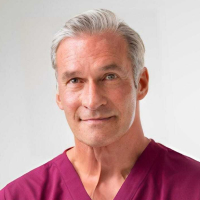
Dr. Rand Insight:
"The question I hear most isn't 'what should I be doing differently.' It's usually already the right question — it's just aimed at the wrong cause. The shift is hormonal and metabolic, and it deserves an evaluation that treats it that way."
Dr. Rand McClain
What individualized evaluation looks like
Not every woman needs hormone replacement therapy, and RHM won't tell you that you do before your labs say so. What individualized evaluation looks like is a full picture — hormones, metabolic markers, thyroid function, and how they connect to what you're actually feeling — rather than a single number or a generic plan. Normal is an average. You are not an average, and the right next step is built around your labs, not a template applied to everyone in your age range.
If brain fog has been part of this picture too, that's a related but distinct piece of the same transition — see Perimenopause Brain Fog: Why It Happens and What Actually Helps for how that connects.
FAQs
Does perimenopause weight gain go away?
For many women, the pace of weight change stabilizes once hormone levels settle post-menopause, though the shift in where weight is stored often persists. An individualized evaluation is the most reliable way to know what to expect for you specifically.
Where does perimenopause weight gain happen (why does it go to the belly)?
Declining estrogen tends to shift fat storage from the hips and thighs toward the abdomen — visceral fat rather than the subcutaneous pattern common earlier in life.
What's the best diet for perimenopause weight gain?
There's no single diet that works the same way for every woman in perimenopause, because the underlying drivers — hormonal, metabolic, insulin-related — differ from person to person. An evaluation that looks at your specific labs is a more reliable starting point than a generic plan.
Can perimenopause cause sudden weight gain?
Some women notice a more abrupt shift rather than a gradual one, often tied to a faster hormonal change or a compounding factor like poor sleep or stress. It's worth mentioning to your provider rather than assuming it will resolve on its own.
How much weight do women typically gain in perimenopause?
This varies significantly by individual, and general averages don't capture what's actually happening in your body. It's a question better answered through your own evaluation than a population-wide number.
Does HRT help with perimenopause weight gain?
For some women, hormone therapy is part of an effective plan; for others, it isn't the right fit. Not every woman needs HRT — whether it's appropriate for you depends on your full lab picture and symptoms, not a default assumption.
What causes weight gain in perimenopause besides hormones?
Muscle loss, shifting insulin sensitivity, sleep disruption, and elevated cortisol all contribute, often compounding each other rather than acting as separate, unrelated causes.
Ready to find out what's actually going on?
You don't have to live with an explanation that never fully fit. Book a VIP Call with RHM and start with a full evaluation — built around you, not a template.

Rand McClain, DO
Rand McClain, DO, is a regenerative medicine and hormone replacement therapy specialist in Santa Monica, California.
With a background in sports medicine and osteopathic care, he focuses on helping patients address complex health concerns through evidence-based, personalized treatment. Dr. McClain is also the Co-founder and Chief Medical Officer of Live Cell Research and is passionate about patient education, nutrition, exercise, and longevity.