Women / Inflamation
Inflammation care for women who no longer feel resilient in their own body.
Inflamation
Your body feels more reactive. Recovery takes longer and sleep feels less restorative. At RHM, we evaluate hormones, thyroid, inflammation, metabolism, stress, and recovery patterns together to understand what your body is actually signaling.

Your body may be asking for more than rest.
You may not have one obvious symptom. It may just feel like your body is slower to recover. Sleep feels less restorative. Stress hits harder. Brain fog lingers. Energy feels less stable.
What you’ve been told:
- “You’re just tired”
- “Your labs look normal”
- “You’re probably just stressed”
If your body keeps pushing back, it may not be random. It may be physiology.
Recovery, energy, and resiliency deserve a closer look.
What is chronic inflammation?
“Chronic inflammation” is often used as a blanket term, but for many people it looks more like a body that feels stuck in a constant state of stress, poor recovery, and imbalance, even when standard labs appear “normal.”
Inflammation rarely shows up as one obvious symptom.
Recovery, energy, sleep, stress, metabolism, and mental clarity often overlap — which is why symptoms can feel hard to explain.
Slower Recovery
Workouts, busy weeks, or poor sleep take longer to bounce back from.

Unstable Energy
Energy crashes, low stamina, or feeling physically flat without a clear reason.
Brain Fog
Mental clarity feels harder to access, especially under stress or fatigue.

Poor Sleep
You sleep, but still wake up feeling unrestored or depleted.
Stress Reactivity
Your body feels more sensitive to stress than it used to.

Metabolic Changes
Body composition, cravings, or weight feel harder to regulate than before.
Why standard care often falls short?
Many people are treated symptom-by-symptom without the broader pattern being explored.
General wellness advice may help support symptoms, but it does not always explain why the pattern developed.
Too Generic
Underconnected
Symptom-Focused
Oversimplified
Low resilience and chronic stress patterns do not always appear dramatic on standard evaluations.
Easily Missed
Reactive
Inflammation care should be built around what is driving the pattern.
Traditional labs
160+ biomarkers
Limited or symptom-based intake
Systems read together
Symptoms reviewed separately
Hormones, thyroid, metabolism, sleep, stress, recovery
Often focused on diet or supplements
Recovery capacity evaluated
Often treated as lifestyle alone
Built around your physiology
Generic anti-inflammatory protocol
Monitored and adjusted over time
Static and generalized
The part most inflammation care skips
Inflammation care should never be one dimensional.



At RHM, we evaluate your labs, symptoms, hormones, metabolism, thyroid function, sleep, stress patterns, recovery capacity, history, and goals before building your care plan.
You can only push through for so long.
You have been trying to make sense of it. The fatigue. The stress. The sleep that should help but doesn’t. The workouts that take too much out of you. It is a pattern that deserves to be understood.
How RHM evaluates inflammation and recovery
Discovery Call
We review your symptoms, recovery, sleep, stress, history, and goals.

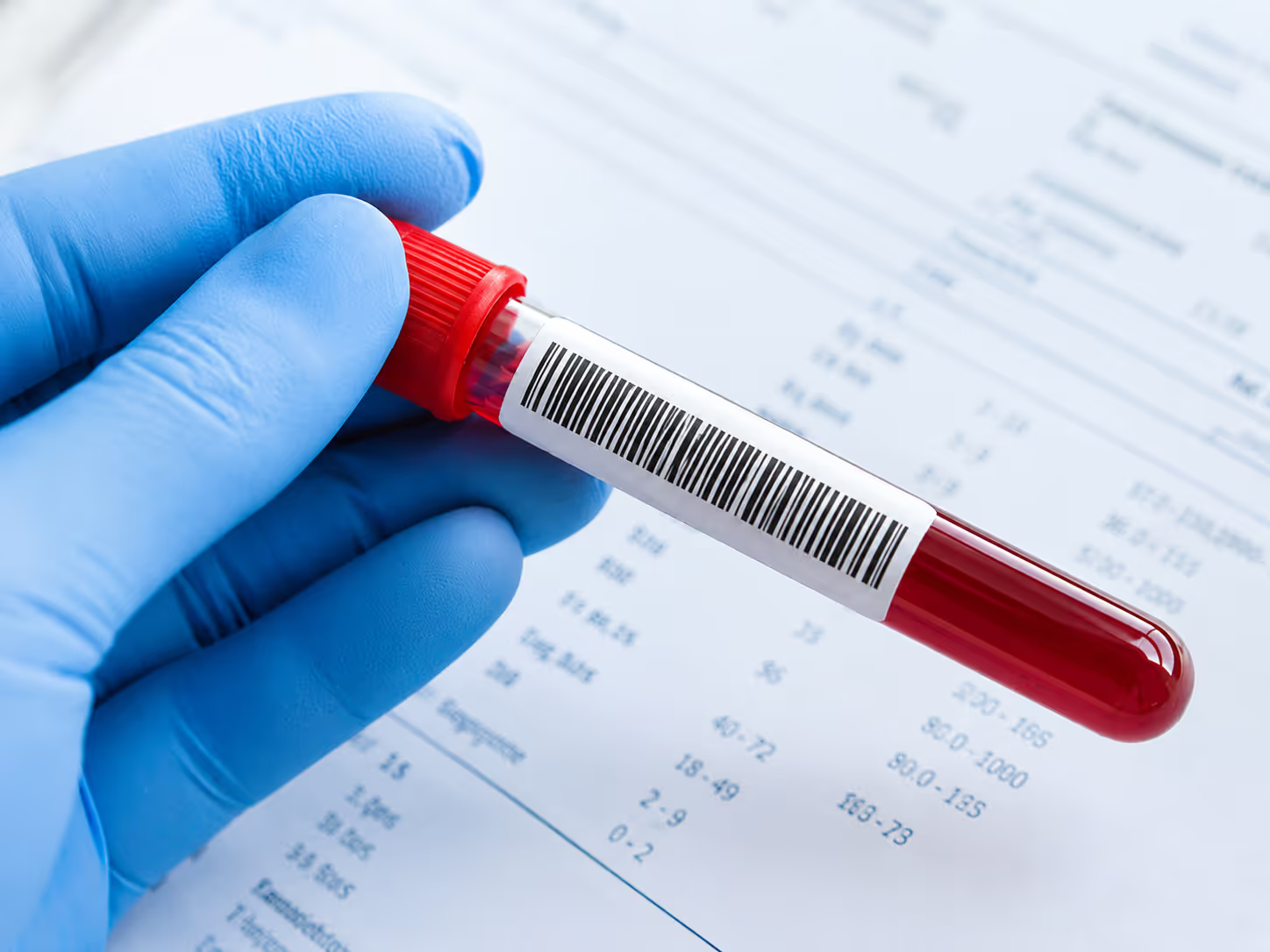
Comprehensive Lab Evaluation
We evaluate 160+ biomarkers across inflammation, hormones, thyroid, metabolism, cortisol, and recovery.
Physician Review
An RHM physician reviews your labs, symptoms, history, and goals.

Personalized care plan
Your care plan is built around your hormones, metabolism, sleep, stress, and recovery needs.

Ongoing monitoring
We track your symptoms, labs, and progress so your care can adjust over time.

Step
1
Step
2
Step
3
Step
4
Step
5

Physician-led care built around your physiology
RHM starts with the pattern underneath your symptoms. We evaluate inflammation, hormones, metabolism, thyroid function, sleep, stress physiology, nervous system load, and recovery together — then build care around what your body is actually doing.
573+
160+
20+
Start with clarity before accepting another generic protocol.
- Personalized, physician-led supportive evaluation
- Hormones, metabolism, thyroid, sleep, and recovery reviewed together
- Advanced testing and clear next steps

FAQ
Why do I feel inflamed even if my labs look normal?
Inflammatory patterns are not always obvious on routine testing. Basic labs may miss the broader context behind how you feel, including sleep, stress, metabolism, hormones, thyroid function, immune activity, and recovery patterns.
Can stress really increase inflammation?
Yes. Chronic stress can affect cortisol, sleep quality, blood sugar regulation, immune activity, gut function, and recovery. Over time, those patterns can contribute to low-grade inflammation or make existing inflammation harder for the body to resolve.
Why does my body feel slower to recover now?
Slower recovery can be connected to chronic inflammation, poor sleep, hormone shifts, thyroid dysfunction, insulin resistance, nutrient deficiencies, overtraining, chronic stress, or nervous system overload. It is often a sign that your body is working harder than it should to return to baseline.
Why do I feel exhausted even when I am functioning normally?
Many women continue functioning while their body is under physiologic strain. Chronic inflammation, stress, poor sleep, thyroid changes, metabolic dysfunction, hormone shifts, and impaired recovery can all create fatigue even when you are still “getting things done.”
Can inflammation affect hormones and metabolism?
Yes. Inflammation can interact with insulin sensitivity, thyroid function, cortisol patterns, estrogen, progesterone, testosterone, and metabolic regulation. This is why inflammation may show up as weight resistance, fatigue, cycle changes, brain fog, poor recovery, or worsening symptoms during perimenopause, menopause, PCOS, thyroid dysfunction, or endometriosis.
Is inflammation always obvious?
No. Chronic inflammation is often subtle. It may show up as fatigue, slower recovery, brain fog, body aches, poor sleep, stress reactivity, stubborn weight changes, digestive issues, or the feeling that your body is more reactive than it used to be.
How can I tell if inflammation is hormonal, metabolic, or stress-related?
Patterns matter. Hormonal inflammation may worsen around cycle changes, perimenopause, or menopause. Metabolic inflammation may come with weight resistance, cravings, blood sugar swings, or insulin resistance. Stress-related inflammation may show up with poor sleep, cortisol issues, tension, anxiety, and slow recovery. Testing and symptom history help identify the dominant driver.
What labs check for chronic inflammation?
A deeper workup may include hs-CRP, CRP, ESR, fasting insulin, glucose, HbA1c, lipid markers, thyroid markers, thyroid antibodies, ferritin, vitamin D, cortisol markers, sex hormones, autoimmune markers, and other labs depending on your symptoms and medical history.
Will treatment just be supplements?
No. Supplements may be useful in some cases, but they should not be the whole plan. Care may involve hormone evaluation, thyroid support, metabolic care, sleep and recovery work, stress physiology support, nutrition, movement, inflammation management, or referral into a more specific care path when needed.
Will I automatically be prescribed medication?
No. Medication is not automatic. RHM evaluates your symptoms, labs, health history, goals, and likely drivers first. Some patients may benefit from medication, while others may need non-medication support or a more targeted evaluation for hormones, thyroid, metabolism, autoimmunity, or recovery.